Blog

  • Dealing with Payment Issues for UPI Users: Causes and Solutions

    Dealing with Payment Issues for UPI Users: Causes and Solutions

    In recent times, users of Unified Payments Interface (UPI) have encountered numerous challenges while making transactions. Such issues were witnessed again this past Tuesday when several users faced difficulties in processing UPI payments. Distressed by these challenges, affected users took to social media to voice their concerns, prompting explanations from the National Payments Corporation of India (NPCI).

    Technical Glitches Behind Payment Hurdles

    According to NPCI, on Tuesday, users of UPI apps such as Google Pay, PhonePe, Paytm, and BHIM experienced disruptions in their transactions. Despite repeated attempts, they were unable to complete payments. NPCI, the governing body for digital payments in India, attributed this to glitches in the servers of some banks rather than issues with UPI itself. NPCI stated that internal technical issues with certain banks led to difficulties for UPI users.

    Internal Technical Challenges Faced by Banks

    NPCI expressed via social media that banks are grappling with some internal technical glitches, resulting in regrettable connectivity issues for UPI users. Assuring the public, NPCI affirmed that its system is fully operational, and they are actively collaborating with these banks to swiftly resolve the encountered issues.

    Users’ Troubles with These Banks

    As reported by Business Today, users of various UPI apps encountered payment troubles on Tuesday. The majority of those affected were customers of HDFC Bank, State Bank of India, Bank of Baroda, among others. Many users also reported incidents of HDFC Bank’s servers being down.

    Potential Resolutions to Mitigate Issues

    Instances of payment difficulties with UPI are not unprecedented. UPI services, like other technical platforms, are susceptible to outages. While complete eradication of such issues may be impractical, they can be minimized. UPI app providers often advise users to link multiple bank accounts to ensure uninterrupted transactions. This way, even if one bank experiences technical glitches, payments can be seamlessly processed through another bank without any disruption.

  • CM Nitish Kumar Joins NDA Amidst Speculations Over Seat Sharing

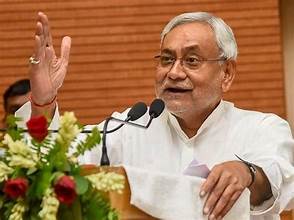
    CM Nitish Kumar Joins NDA Amidst Speculations Over Seat Sharing

    Nitish Kumar, the Chief Minister of Bihar, has recently allied with the Bharatiya Janata Party (BJP) in the National Democratic Alliance (NDA) ahead of the 2024 Lok Sabha elections. However, uncertainties loom over the allocation of seats within the NDA, particularly regarding whether Nitish Kumar will secure 17 seats in the alliance. The demand for 17 seats by the Janata Dal United (JDU), which is a part of the NDA, had been ongoing, but no agreement had been reached. Amidst this, Nitish Kumar has made a shift in his stance, yet uncertainties persist within the NDA.

    Meeting with Key Figures in Delhi

    Nitish Kumar is scheduled to visit Delhi today (February 7), where he will meet Prime Minister Narendra Modi. Additionally, he will hold discussions with senior BJP leaders Amit Shah and JP Nadda. Just two days ago, central leadership of the BJP had convened a meeting in Delhi with Bihar’s Deputy Chief Ministers, Sushil Modi and Tarkishore Prasad. This has sparked discussions regarding whether there’s a deadlock over seat allocations for the 2024 elections.

    Recap of 2019 Elections

    In the 2019 Lok Sabha elections, the JD(U)-BJP alliance and the Lok Janshakti Party (LJP) had contested together. They fielded candidates on 17 seats each, while LJP contested on 6 seats. Despite JD(U) facing defeat on one seat, BJP emerged victorious on all 17 seats it contested, along with LJP securing wins on its 6 seats.

    Changing Dynamics for 2024

    The dynamics seem to be shifting for the 2024 elections as Ram Manjhi and Upendra Kushwaha have also joined the NDA this time. Moreover, the Lok Janshakti Party is divided into two factions, one led by Pashupati Paras and the other by Chirag Paswan. In this scenario, with BJP and JD(U) contesting on 17 seats each as in 2019, how will the distribution of seats among the 6 constituencies be decided? How many seats will be allocated to Chirag Paswan, Pashupati Paras, Ram Manjhi, and Upendra Kushwaha? Will Chirag Paswan, who has already demanded 6 seats, agree to the final allocation?

    Speculations and Negotiations

    Numerous questions arise, and speculations suggest ongoing deliberations within the NDA regarding seat sharing. According to sources, the central government has also intervened to reduce JD(U)’s share of seats in Bihar. It has been suggested that JD(U) might be allocated 11 to 12 seats. On the other hand, Chirag Paswan shows no signs of backing down. If Chirag Paswan indeed secures 6 seats, what will be the course of action for the remaining contenders? What will be the next scenario?

  • Hanu Man’ Box Office Collection: How Much Did the Film Earn in Its 26th Day of Release?

    Hanu Man’ Box Office Collection: How Much Did the Film Earn in Its 26th Day of Release?

    Introduction: The Success Story of ‘Hanu Man’

    The latest sensation in the Telugu film industry, ‘Hanu Man’, has been creating waves ever since its release a month ago. Despite being a low-budget production, the film has managed to captivate audiences and rake in millions at the box office, overshadowing many big-budget releases including Mahesh Babu’s ‘Guntur Karam’. While facing stiff competition from Hrithik Roshan’s ‘Fighter’, ‘Hanu Man’ remains resilient, refusing to bow down to box office pressures. Let’s delve into the details of its earnings on its 26th day since release.

    Box Office Performance: Earnings Over the Weeks

    ‘Hanu Man’, a Telugu superhero film, hit theaters during the festive season of Sankranti. Garnering immense praise from audiences, the film has been a consistent performer at the box office since its debut. Having completed four weeks since its release, ‘Hanu Man’ continues to add millions to its collection every day.

    In the first week, ‘Hanu Man’ amassed a staggering collection of ₹89.8 crores. Despite a slight dip in the second week, the film managed to rake in ₹60.6 crores. Even in its third week, ‘Hanu Man’ maintained its stronghold with earnings of ₹29.95 crores. As it enters its fourth week, the film has started with impressive figures, grossing ₹1.45 crores on Friday, ₹2.85 crores on Saturday, ₹4 crores on Sunday, and ₹1.18 crores on Monday. The early numbers for Tuesday’s earnings have also been promising.

    Latest Figures: Day 26 Collection

    According to early trends reported by Sakinalk, ‘Hanu Man’ collected ₹1.10 crores on its 26th day of release. With this, the total earnings of ‘Hanu Man’ over 26 days have reached a whopping ₹190.93 crores.

    Global Success: Breaking Records Worldwide

    The success of ‘Hanu Man’ isn’t confined to domestic markets alone; it has made its mark globally as well. Even after 26 days since its release, the film continues to rake in millions worldwide. Trade analyst Manobala Vijayabalan shared staggering figures, indicating that ‘Hanu Man’ surpassed the ₹300 crores mark globally within 25 days of its release. With this, the total global collection of ‘Hanu Man’ now stands at ₹300.23 crores.

    Cast and Crew: Behind the Success

    Directed by Prashant Varma, ‘Hanu Man’ marks the debut of Prashant’s cinematic universe (PCU). The stellar cast includes Teja Sajja, Varalaxmi Sarathkumar, and Amrita Ayyar in pivotal roles. The film hit theaters on January 12th, garnering attention for its fresh storyline and captivating performances.

  • Rising Prices in Kerala: Implications of the Recent Budget Session

    Rising Prices in Kerala: Implications of the Recent Budget Session

    Kerala’s Alcohol Prices Surge

    The recent budget session in Kerala has led to a surge in prices of certain commodities and services. The left-wing coalition government in Kerala presented its budget today, announcing an increase in the prices of alcohol and court fees.

    Alcohol Prices Hike

    Finance Minister N. Balagopal, while presenting the fourth budget for the Pinarayi Vijayan-led government, announced a hike in excise duty on Indian-made foreign liquor (IMFL) by Rs. 10 per liter to generate revenue of Rs. 200 crores. He stated, “The excise law allows for a gallonage fee of up to Rs. 30 per liter on the sale of Indian-made foreign liquor. It has been fixed at Rs. 10 per liter.” This move is anticipated to bring in additional revenue of Rs. 200 crores.

    Increased Charges on Electricity Generation

    Furthermore, the budget for the fiscal year 2024-25 has raised the judicial fee and electricity charges for self-generating individuals. A proposal to increase electricity charges by 15 paise per unit for consumers producing and consuming energy for their own use has been included in the budget. This is expected to generate an additional revenue of Rs. 24-25 crores. The Finance Minister stated, “Electricity charges are being levied at a rate of six paise per unit since 1963. It has been increased to ten paise per unit. We expect to receive an additional revenue of Rs. 101.41 crores.”

    Amendments in Court Fees

    To explore avenues for collecting more revenue from the sector, Kerala will consider amendments to the Kerala Court Fees and Suit Valuation Act, 1959. “Through these amendments, the government expects to earn revenue of Rs. 50 crores,” stated Balagopal.

    Minimum Support Price for Rubber Increased

    In the budget for the fiscal year 2024-25, Rs. 1,698.30 crores have been allocated for the agricultural sector, with the minimum support price for rubber being raised from Rs. 170 to Rs. 180. Amidst growing demands from rubber farmers for an increase in its support price, Balagopal announced a hike of Rs. 10 in its support price. He said, “The minimum support price for rubber has been increased from Rs. 170 to Rs. 180.” A separate allocation of Rs. 1,698 crores will be reserved for traditional agricultural sectors.

    Allocation for Poverty Alleviation and Cooperative Sector

    An allocation of Rs. 50 crores has been set aside for poverty alleviation, along with Rs. 134.42 crores for the cooperative sector.

    Investment Attraction in Tourism Sector

    A sum of Rs. 5,000 crores will be attracted as investment in the tourism sector. “The tourism sector is growing. An allocation of Rs. 351 crores is being made for it in the fiscal year 2024-25.”

    Allocation for Digital University

    In a bid to provide more support to the higher education sector, the minister earmarked Rs. 250 crores for the digital university.

    Continued Efforts in Infrastructure Projects

    He further added, “Our efforts to materialize the state rail project will continue. Discussions with the central government are ongoing in this regard.” A sum of Rs. 300.73 crores has been earmarked for the timely implementation of major projects such as Vizhinjam Port, Kochi Metro, and Kannur Airport.

    Commitment to Investment

    While presenting the fourth budget for the state government, Chief Minister Pinarayi Vijayan emphasized that despite facing economic challenges and central financial constraints, the Left Democratic Front government will not compromise on the development front. The Finance Minister stated that over the next three years, the southern state will witness an investment of three lakh crores. He also held the central government’s economic policies responsible for the financial woes of the southern state and alleged neglect of Kerala.

  • Paytm CEO Meets Finance Minister Amidst RBI Restrictions

    Paytm CEO Meets Finance Minister Amidst RBI Restrictions

    In a recent development, Paytm’s CEO, Vijay Shekhar Sharma, found himself amidst a whirlwind of challenges as the Reserve Bank of India (RBI) imposed stringent restrictions on the popular digital wallet and banking service provider. Here’s an in-depth look at the unfolding scenario and the subsequent actions taken by Paytm to address these regulatory concerns.

    Navigating Regulatory Challenges: Paytm Faces RBI Heat

    The recent encounter between Vijay Shekhar Sharma and Finance Minister Nirmala Sitharaman shed light on the growing concerns surrounding Paytm’s compliance with RBI regulations. Despite the mounting pressure, government sources revealed that the Finance Minister iterated the government’s stance on the matter: there would be no intervention in the ongoing regulatory proceedings between Paytm and the RBI.

    RBI’s Directive: Implications for Paytm

    The RBI’s directive, issued last week, dealt a significant blow to Paytm’s operations, leading to a dramatic plunge in its shares by over 40%. The regulatory order mandated Paytm to halt its digital wallet services, deposits, and credit products, prompting the company to swiftly enter damage control mode.

    Engagement with Regulatory Authorities

    In an attempt to address the regulatory hurdles, Vijay Shekhar Sharma engaged in discussions with both Finance Minister Nirmala Sitharaman and RBI officials. However, the outcome of these discussions remains uncertain, as Paytm strives to navigate the complex regulatory landscape and restore compliance with RBI guidelines.

    RBI’s Firm Stance: Actions Against Paytm

    The RBI’s actions against Paytm included the prohibition of Paytm Payments Bank Ltd from accepting deposits or facilitating credit transactions after February 29. Additionally, the termination of nodal accounts linked to Paytm’s parent company, One97 Communications Ltd, further exacerbated the situation, signaling the gravity of the regulatory non-compliance.

    Reassuring Customers Amidst Uncertainty

    As Paytm grapples with the aftermath of RBI’s restrictions, concerns regarding the safety of customers’ funds have surfaced. Despite assurances from Paytm Payments Bank regarding the security of deposited funds, the inability to make further deposits beyond February 29 raises apprehensions among users.

    Way Forward: Paytm’s Commitment to Resolution

    In response to the regulatory upheaval, Vijay Shekhar Sharma reaffirmed Paytm’s commitment to resolving the issues at hand. With ongoing discussions with regulatory authorities and a pledge to comply with RBI directives, Paytm aims to emerge stronger from this challenging period while ensuring minimal disruption to its services.

  • Empowering Women Financially: MSSC vs SSY

    Empowering Women Financially: MSSC vs SSY

    In a bid to cater to the diverse needs of women across the nation, the postal service continually introduces schemes tailored to their requirements. With the aim of fostering self-reliance among half of the country’s population, the Post Office launches various initiatives. In the 2023 budget, Finance Minister Nirmala Sitharaman unveiled the Mahila Samman Saving Certificate (MSSC) Scheme, catering specifically to the needs of women. As the name suggests, this scheme is crafted with a focus on fulfilling women’s financial goals. By investing in this scheme for two years, individuals can yield substantial returns. Additionally, for securing the financial future of their daughters, investors can opt for the Sukanya Samriddhi Yojana (SSY), offering robust returns over a period of ten years. Both schemes are meticulously designed to address women’s needs, ensuring significant returns on investment. Let’s delve into the details of both initiatives:

    Mahila Samman Saving Certificate (MSSC) Scheme

    This scheme welcomes investments from women of all age groups, with a maximum investment limit of INR 2 lakhs. By investing funds for two years, investors can benefit from a guaranteed interest rate of 7.50%. Under this scheme, deposits are eligible for an income tax exemption of up to INR 1.50 lakhs under Section 80C. Investing INR 2 lakhs in this scheme in December 2023 could yield returns of INR 2,32,044 at maturity.

    Sukanya Samriddhi Yojana (SSY)

    Introduced by the Modi government in 2014, the Sukanya Samriddhi Yojana is tailored to meet the specific needs of women. Under this scheme, individuals can open a Sukanya Samriddhi Account for their daughters and invest anywhere between INR 250 to INR 1.50 lakhs annually for a period of 10 years, ensuring substantial returns. Upon reaching 18 years of age, the girl child can withdraw up to 50% of the accumulated amount, while the entire sum can be withdrawn upon reaching 21 years of age. Investing in this scheme alleviates the financial burden of education and marriage expenses for daughters. Currently, the government offers an interest rate of 8% on deposits under this scheme.

    MSSC vs SSY: A Comparative Analysis

    Both the Mahila Samman Saving Certificate and Sukanya Samriddhi Yojana are tailored to meet the financial needs of women. However, a key differentiator is the duration of investment. While SSY offers a long-term savings plan, MSSC provides opportunities for higher returns within a shorter timeframe. Investing in SSY ensures financial security for a daughter’s future expenses, including education and marriage, while opting for MSSC allows investors to reap significant returns over a shorter period.

  • Expressing Love Through Roses: A Guide to Choosing the Perfect Flower for Valentine’s Week

    Expressing Love Through Roses: A Guide to Choosing the Perfect Flower for Valentine’s Week

    Valentine’s Week is just around the corner, and it kicks off with Rose Day on February 7, leading up to the much-anticipated Valentine’s Day on February 14. Rose Day marks the beginning of a week-long celebration dedicated to love, life, and passion. It’s a time for people to express their deepest emotions and affection for their loved ones through various gestures, with the exchange of roses being a quintessential tradition.

    Celebrating Love with Roses

    Roses have long been revered as a timeless symbol of love and affection. They hold a special significance in the realm of romance, making them the perfect choice for expressing heartfelt sentiments on Rose Day. Let’s explore the different types of roses and their meanings, helping you choose the perfect bloom for your beloved.

    1. Red Rose: Symbol of Passionate Love

    Red roses reign supreme as the ultimate symbol of love and romance. They encapsulate deep emotions and passion, making them the go-to choice for expressing profound affection. Whether you’re celebrating with your partner or expressing your undying love for someone special, red roses convey the purest form of love and commitment. They set the perfect tone for kicking off Valentine’s Week with your beloved by your side.

    2. Pink Rose: Elegance and Gratitude

    Pink roses embody sweetness, admiration, and gratitude. They exude joy and happiness, making them an excellent choice for expressing appreciation towards your partner, family, or friends. The delicate hue of pink adds an element of sophistication, making these roses a thoughtful and aesthetically pleasing gift for your loved ones.

    3. Yellow Rose: Symbol of Friendship and Happiness

    Yellow roses radiate friendship, happiness, and positive energy. They are ideal for expressing joy and camaraderie, symbolizing good health and genuine friendship. Whether you’re celebrating the cherished bonds of friendship or expressing affection towards someone special, yellow roses serve as a cheerful and optimistic gesture.

    4. White Rose: Purity and New Beginnings

    White roses symbolize purity, innocence, and new beginnings. They are perfect for commemorating fresh starts and expressing respect and appreciation towards your loved ones. Whether you’re embarking on a new chapter in your relationship or simply cherishing the bond with a dear friend, white roses convey hope, love, and reverence.

    5. Peach Rose: Sincere Affection and Intimacy

    Peach roses represent sincerity, affection, and genuine love. They are an excellent choice for couples seeking to celebrate their love in a more intimate and personal manner. With their subtle elegance, peach roses add a touch of sophistication to Valentine’s Day or Rose Day celebrations. If you’re planning a romantic gesture or a heartfelt proposal, a peach rose can beautifully convey your deepest emotions.

  • Understanding Uniform Civil Code (UCC) and Its Implications on Muslim Personal Law in India

    Understanding Uniform Civil Code (UCC) and Its Implications on Muslim Personal Law in India

    The debate surrounding the implementation of the Uniform Civil Code (UCC) is once again gaining momentum across the country. On Tuesday, February 6, 2024, Pushkar Singh Dhami presented the “Uniform Civil Code, Uttarakhand-2024” bill in the state assembly. As discussions on the bill unfold in the Uttarakhand Legislative Assembly, various Muslim organizations have expressed their opposition to it. However, the fate of the bill remains uncertain pending further deliberation and eventual passage. Let’s delve into the potential challenges that Muslims might face under the UCC.

    Challenges Faced by Muslims Under the UCC

    Marriageable Age:
    In India, different religions have their own personal laws governing various aspects, including marriage. The Muslim Personal Law, established by the Muslim Personal (Shariat) Application Act of 1937, governs marriage among Muslims. If the Uniform Civil Code is enforced, it would abolish these laws, necessitating compliance with a uniform set of regulations. Currently, the minimum age for marriage for girls in India is 18 years, while under Muslim Personal Law, girls can be married off after reaching 15 years of age. The prohibition of child marriage under the Prohibition of Child Marriage Act poses a challenge to Muslim Personal Law, as it contradicts these provisions.

    Divorce and Maintenance:
    Muslim divorce proceedings adhere to Sharia law. Moreover, Muslims enjoy certain exemptions under personal laws that differ from those provided under special marriage acts of other religions. Additionally, severe penalties, including a three-year jail term, are proposed for those who violate divorce laws. The UCC would grant equal rights to both men and women in divorce proceedings. Women would have the freedom to remarry without any conditions, and restrictions on the fulfillment of iddat would also be lifted.

    Iddat Period:
    Iddat serves as a waiting period that Muslim women must observe after the death of their husbands or divorce. It lasts for 3 months and 10 days after divorce, while in the event of the husband’s death, it extends to 4 months and 10 days. During iddat, women are prohibited from meeting non-mahram men and are expected to remain in seclusion.

    Maintenance Allowance:
    Muslims have different rules regarding maintenance allowances post-divorce. While Muslim men are obligated to provide maintenance to their wives only for the duration of iddat, under Indian law, women are entitled to lifelong maintenance unless they remarry.

    Property Division:
    The division of property among Muslim women follows different rules compared to Hindu inheritance laws, which ensure equal rights for sons and daughters. This variance instills fear of interference among Muslims regarding property matters.

    Polygamy:
    Polygamy, the practice of having multiple spouses while being married to one, is permissible among Muslims, with a limit of four wives. However, the prevalence of polygamy among Indian Muslims is significantly lower compared to the perception. According to the National Family Health Survey data from 2019-21, only 1.9% of women admitted to their husbands having multiple wives. Despite this, Muslims fear interference with Sharia law, as they oppose any amendments that could potentially infringe upon their religious practices.

    Adoption:
    Islam does not recognize adoption in the same manner as Indian law does. Consequently, Muslim personal laws preclude Muslims from adopting children legally. This prohibition denies childless individuals the opportunity to adopt children legally.

    Child Custody:
    Under Sharia law, the father is recognized as the natural guardian of both sons and daughters. However, custody rights for sons and daughters differ under Indian law. Mothers have custody of their sons until they reach the age of 7 and daughters until they attain puberty.

  • Unveiling of Sacred Black Stone Bricks from Mecca for Construction of Ayodhya Mosque

    Unveiling of Sacred Black Stone Bricks from Mecca for Construction of Ayodhya Mosque

    In the bustling city of Ayodhya, plans are underway for the construction of a mosque spanning across 5 acres of land, marked by the auspicious presence of bricks brought all the way from the holy city of Mecca. These sacred bricks, meticulously washed with water from the Zamzam well and perfumed with itr, will be ceremoniously placed on February 29th, followed by a journey to Ajmer Sharif. This monumental endeavor stems from a historic decision by the Supreme Court in 2019, resolving the Ayodhya land dispute and granting permission for the mosque’s construction.

    Foundation Laid with Holy Black Bricks

    The foundation of the mosque in Ayodhya will be laid with these sacred black bricks, symbolizing a profound spiritual connection. The inaugural ceremony for the unveiling of these bricks took place on October 12, 2023, during the All India Rabta-e-Masjid program. Subsequently, under the supervision of Mohammad Bin Abdullah Development Committee’s chairman, Arfat Sheikh, the bricks were transported to Mecca for the purification ritual and then to Medina for further consecration before their journey back to India.

    Inscriptions of Quranic Verses and Prophet’s Names

    Crafted from special black clay, these bricks bear inscriptions of select verses from the holy Quran in gold, alongside the revered names of the Prophet Muhammad. Post the celebrations of Ramadan and Eid in April, the bricks will find their way to Ayodhya, where, 25 kilometers away in Dhannipur, the construction of the mosque will commence. Aptly named Masjid Mohammad Bin Abdullah, this mosque is envisioned to become a central hub for Islamic prayers in India, fostering unity and spirituality among its followers.

    Five Minarets Symbolizing Five Pillars of Islam

    Arfat Sheikh further elaborated on the architectural marvels planned for this mosque, highlighting its distinction as the first in India to feature five minarets, each symbolizing one of the five pillars of Islam. These pillars encompass Tawheed (belief in the oneness of Allah), Salah (performing prayers five times a day), Sawm (fasting during the month of Ramadan), Zakat (giving to the less fortunate), and Hajj (the pilgrimage to Mecca).

  • Shifting Political Alliances Before Lok Sabha Elections

    Shifting Political Alliances Before Lok Sabha Elections

    In the realm of Indian politics, the landscape is ever-changing, especially in the lead-up to the Lok Sabha elections. Parties are continually shifting alliances, leaving behind erstwhile partners to forge new connections in pursuit of electoral success. This dynamic churn in political affiliations underscores the intricate dance of power and strategy that defines the Indian political arena.

    The Dynamics of Alliance Formation

    Before delving deeper into the current landscape of political alliances, it’s crucial to understand the underlying motivations driving these shifts. With each party eyeing electoral victories and the coveted seats in the Lok Sabha, alliances play a pivotal role in consolidating support bases and maximizing electoral gains.

    Parting Ways: A Prelude to New Alliances

    In recent months, several parties have severed ties with their erstwhile allies, setting the stage for new alignments. Some have distanced themselves from the Indian National Congress-led United Progressive Alliance (UPA), while others are actively charting a separate path, aiming to carve out their unique political trajectories. Simultaneously, discussions are underway between various parties and the Bharatiya Janata Party (BJP)-led National Democratic Alliance (NDA), indicating a potential realignment of political forces.

    The BJP’s Ongoing Dialogues with Regional Players

    Notably, discussions between the BJP and regional players are ongoing, with the Rashtriya Lok Dal (RLD) being one of the key interlocutors. Meanwhile, the Bahujan Samaj Party (BSP) appears to be facing a setback, with indications of strained relations. In Punjab, the Shiromani Akali Dal (SAD) stands as the sole ally of the BSP. However, insider sources suggest that the SAD is once again exploring the possibility of aligning with the BJP-led coalition, signaling a potential realignment in the offing.

    Exploring Alliance Possibilities: BJP and Shiromani Akali Dal

    Negotiations between the BJP and the Shiromani Akali Dal are reportedly in the final stages, with both parties deliberating over the contours of a prospective alliance. Should this alliance materialize, it would mark a significant political development, particularly for the Shiromani Akali Dal, which has a history of collaboration with the BJP. From 1997 until September 2020, the Akali Dal remained a steadfast ally of the BJP, underscoring the deep-rooted ties between the two parties.

    Mayawati’s Strategic Decision

    However, for Mayawati, the prospect of the Shiromani Akali Dal rejoining the NDA poses a considerable challenge. In the lead-up to the Punjab Legislative Assembly elections, Mayawati’s Bahujan Samaj Party had forged an alliance with the Akali Dal. While this alliance failed to yield significant electoral dividends in the recent polls, both parties remained committed to exploring future collaboration.

    Future Prospects: The Road Ahead

    As the political landscape continues to evolve, the decisions made by key players will shape the trajectory of Indian politics in the months to come. With alliances being forged and broken in pursuit of electoral success, the dynamics of power-sharing and coalition-building remain at the forefront of political discourse. In this ever-changing landscape, adaptability and strategic maneuvering are paramount for parties vying for supremacy in the corridors of power.