Category: national

  • Unveiling Opportunities: Ram Temple Inauguration Sparks Economic Growth in Ayodhya

    Unveiling Opportunities: Ram Temple Inauguration Sparks Economic Growth in Ayodhya

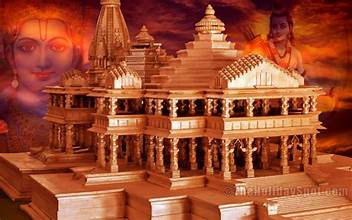
    In a grand ceremony on January 22, 2024, Ayodhya witnessed the consecration of Lord Rama’s idol with immense fervor. Following the consecration, thousands flocked to the temple to witness the divine spectacle. According to reports, the inauguration of the Ram Temple in Ayodhya is expected to generate direct and indirect employment opportunities for approximately two hundred thousand people in Ayodhya and surrounding cities over the next five years.

    Economic Boom Post Ram Temple Inauguration

    The Economic Times reported that the Human Capital Saas Platform, BetterPlace, anticipates a surge in employment opportunities in Ayodhya due to the inauguration of the Sri Ram Temple. BetterPlace predicts that in the next four to five years, Ayodhya could witness employment opportunities ranging from 150,000 to 200,000 individuals. Praveen Agrawal, Co-founder and Group CEO of BetterPlace, highlighted the expansion of essential infrastructure, including hotel chains, apartment units, healthcare facilities, and other fundamental structures in Ayodhya, leading to the creation of immediate jobs ranging from 50,000 to 100,000.

    Tourism Boost and Employment Surge

    BetterPlace estimates that in the coming years, Ayodhya will attract an annual influx of five million visitors seeking spiritual solace. Within the next few months, the tourism sector is expected to witness an upsurge, creating an immediate 10,000 to 30,000 jobs. Sectors related to travel and tourism, such as hospitality, hotels, and tourism-focused companies, stand to benefit. Additionally, industries like food and beverage, daily necessities, personal care products, healthcare, and banking are poised to thrive as Ayodhya experiences a rapid surge in demand.

    The Economic Impact of Temple Construction

    Before the temple’s inauguration, the Confederation of All India Traders (CAIT) had estimated that the economic impact of temple-related commerce could surpass a staggering one trillion rupees. This projection was issued by CAIT after gathering feedback from thirty cities across the country.

    The unprecedented economic growth sparked by the Ram Temple inauguration paints a promising picture for Ayodhya and its residents. The infusion of employment opportunities across various sectors is not only a testament to the cultural significance of the event but also a catalyst for the city’s economic renaissance. As Ayodhya emerges as a focal point for spiritual tourism, it opens doors to prosperity, not just for the faithful but for the entire community.
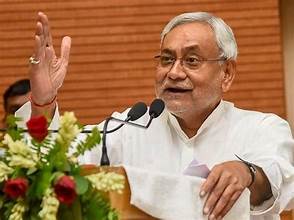

  • CM Nitish Kumar Joins NDA Amidst Speculations Over Seat Sharing

    CM Nitish Kumar Joins NDA Amidst Speculations Over Seat Sharing

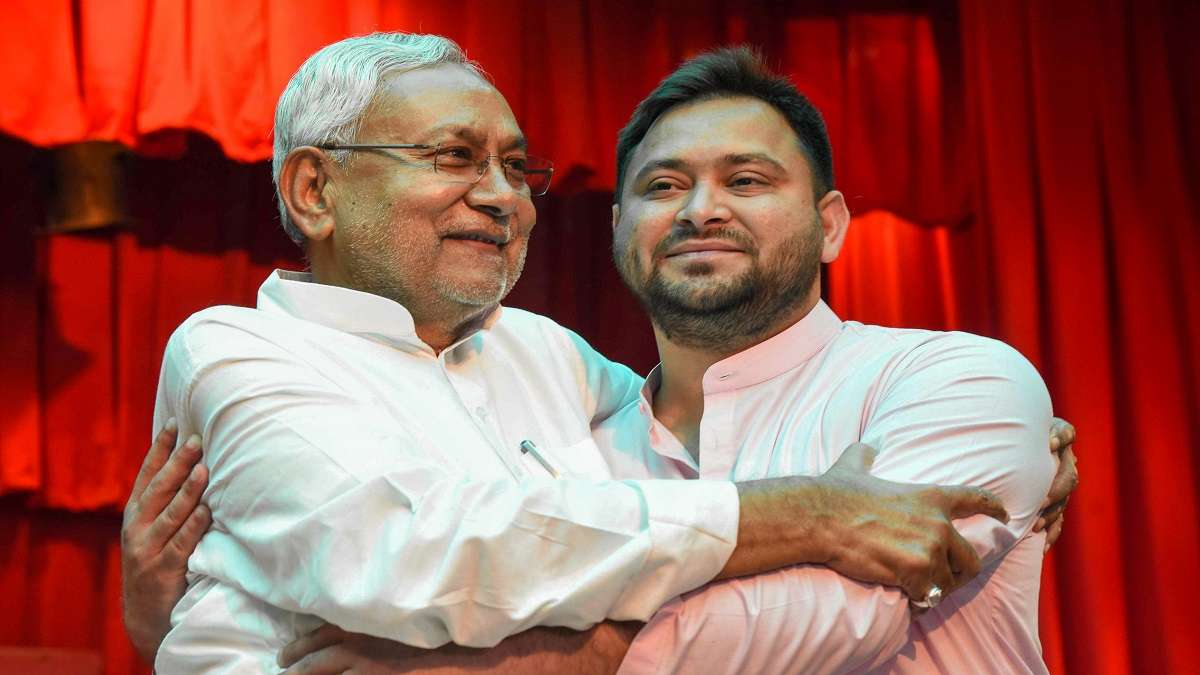
    Nitish Kumar, the Chief Minister of Bihar, has recently allied with the Bharatiya Janata Party (BJP) in the National Democratic Alliance (NDA) ahead of the 2024 Lok Sabha elections. However, uncertainties loom over the allocation of seats within the NDA, particularly regarding whether Nitish Kumar will secure 17 seats in the alliance. The demand for 17 seats by the Janata Dal United (JDU), which is a part of the NDA, had been ongoing, but no agreement had been reached. Amidst this, Nitish Kumar has made a shift in his stance, yet uncertainties persist within the NDA.

    Meeting with Key Figures in Delhi

    Nitish Kumar is scheduled to visit Delhi today (February 7), where he will meet Prime Minister Narendra Modi. Additionally, he will hold discussions with senior BJP leaders Amit Shah and JP Nadda. Just two days ago, central leadership of the BJP had convened a meeting in Delhi with Bihar’s Deputy Chief Ministers, Sushil Modi and Tarkishore Prasad. This has sparked discussions regarding whether there’s a deadlock over seat allocations for the 2024 elections.

    Recap of 2019 Elections

    In the 2019 Lok Sabha elections, the JD(U)-BJP alliance and the Lok Janshakti Party (LJP) had contested together. They fielded candidates on 17 seats each, while LJP contested on 6 seats. Despite JD(U) facing defeat on one seat, BJP emerged victorious on all 17 seats it contested, along with LJP securing wins on its 6 seats.

    Changing Dynamics for 2024

    The dynamics seem to be shifting for the 2024 elections as Ram Manjhi and Upendra Kushwaha have also joined the NDA this time. Moreover, the Lok Janshakti Party is divided into two factions, one led by Pashupati Paras and the other by Chirag Paswan. In this scenario, with BJP and JD(U) contesting on 17 seats each as in 2019, how will the distribution of seats among the 6 constituencies be decided? How many seats will be allocated to Chirag Paswan, Pashupati Paras, Ram Manjhi, and Upendra Kushwaha? Will Chirag Paswan, who has already demanded 6 seats, agree to the final allocation?

    Speculations and Negotiations

    Numerous questions arise, and speculations suggest ongoing deliberations within the NDA regarding seat sharing. According to sources, the central government has also intervened to reduce JD(U)’s share of seats in Bihar. It has been suggested that JD(U) might be allocated 11 to 12 seats. On the other hand, Chirag Paswan shows no signs of backing down. If Chirag Paswan indeed secures 6 seats, what will be the course of action for the remaining contenders? What will be the next scenario?

  • Rising Prices in Kerala: Implications of the Recent Budget Session

    Rising Prices in Kerala: Implications of the Recent Budget Session

    Kerala’s Alcohol Prices Surge

    The recent budget session in Kerala has led to a surge in prices of certain commodities and services. The left-wing coalition government in Kerala presented its budget today, announcing an increase in the prices of alcohol and court fees.

    Alcohol Prices Hike

    Finance Minister N. Balagopal, while presenting the fourth budget for the Pinarayi Vijayan-led government, announced a hike in excise duty on Indian-made foreign liquor (IMFL) by Rs. 10 per liter to generate revenue of Rs. 200 crores. He stated, “The excise law allows for a gallonage fee of up to Rs. 30 per liter on the sale of Indian-made foreign liquor. It has been fixed at Rs. 10 per liter.” This move is anticipated to bring in additional revenue of Rs. 200 crores.

    Increased Charges on Electricity Generation

    Furthermore, the budget for the fiscal year 2024-25 has raised the judicial fee and electricity charges for self-generating individuals. A proposal to increase electricity charges by 15 paise per unit for consumers producing and consuming energy for their own use has been included in the budget. This is expected to generate an additional revenue of Rs. 24-25 crores. The Finance Minister stated, “Electricity charges are being levied at a rate of six paise per unit since 1963. It has been increased to ten paise per unit. We expect to receive an additional revenue of Rs. 101.41 crores.”

    Amendments in Court Fees

    To explore avenues for collecting more revenue from the sector, Kerala will consider amendments to the Kerala Court Fees and Suit Valuation Act, 1959. “Through these amendments, the government expects to earn revenue of Rs. 50 crores,” stated Balagopal.

    Minimum Support Price for Rubber Increased

    In the budget for the fiscal year 2024-25, Rs. 1,698.30 crores have been allocated for the agricultural sector, with the minimum support price for rubber being raised from Rs. 170 to Rs. 180. Amidst growing demands from rubber farmers for an increase in its support price, Balagopal announced a hike of Rs. 10 in its support price. He said, “The minimum support price for rubber has been increased from Rs. 170 to Rs. 180.” A separate allocation of Rs. 1,698 crores will be reserved for traditional agricultural sectors.

    Allocation for Poverty Alleviation and Cooperative Sector

    An allocation of Rs. 50 crores has been set aside for poverty alleviation, along with Rs. 134.42 crores for the cooperative sector.

    Investment Attraction in Tourism Sector

    A sum of Rs. 5,000 crores will be attracted as investment in the tourism sector. “The tourism sector is growing. An allocation of Rs. 351 crores is being made for it in the fiscal year 2024-25.”

    Allocation for Digital University

    In a bid to provide more support to the higher education sector, the minister earmarked Rs. 250 crores for the digital university.

    Continued Efforts in Infrastructure Projects

    He further added, “Our efforts to materialize the state rail project will continue. Discussions with the central government are ongoing in this regard.” A sum of Rs. 300.73 crores has been earmarked for the timely implementation of major projects such as Vizhinjam Port, Kochi Metro, and Kannur Airport.

    Commitment to Investment

    While presenting the fourth budget for the state government, Chief Minister Pinarayi Vijayan emphasized that despite facing economic challenges and central financial constraints, the Left Democratic Front government will not compromise on the development front. The Finance Minister stated that over the next three years, the southern state will witness an investment of three lakh crores. He also held the central government’s economic policies responsible for the financial woes of the southern state and alleged neglect of Kerala.

  • Understanding Uniform Civil Code (UCC) and Its Implications on Muslim Personal Law in India

    Understanding Uniform Civil Code (UCC) and Its Implications on Muslim Personal Law in India

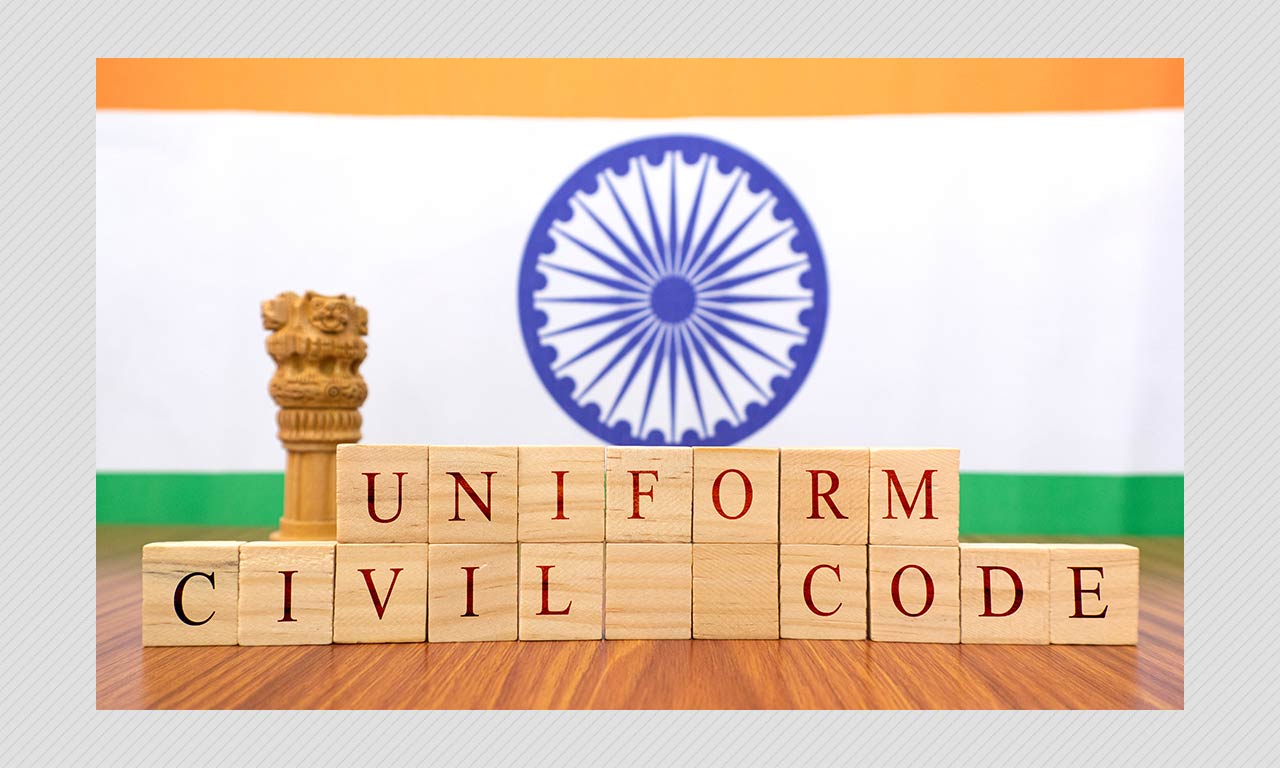
    The debate surrounding the implementation of the Uniform Civil Code (UCC) is once again gaining momentum across the country. On Tuesday, February 6, 2024, Pushkar Singh Dhami presented the “Uniform Civil Code, Uttarakhand-2024” bill in the state assembly. As discussions on the bill unfold in the Uttarakhand Legislative Assembly, various Muslim organizations have expressed their opposition to it. However, the fate of the bill remains uncertain pending further deliberation and eventual passage. Let’s delve into the potential challenges that Muslims might face under the UCC.

    Challenges Faced by Muslims Under the UCC

    Marriageable Age:
    In India, different religions have their own personal laws governing various aspects, including marriage. The Muslim Personal Law, established by the Muslim Personal (Shariat) Application Act of 1937, governs marriage among Muslims. If the Uniform Civil Code is enforced, it would abolish these laws, necessitating compliance with a uniform set of regulations. Currently, the minimum age for marriage for girls in India is 18 years, while under Muslim Personal Law, girls can be married off after reaching 15 years of age. The prohibition of child marriage under the Prohibition of Child Marriage Act poses a challenge to Muslim Personal Law, as it contradicts these provisions.

    Divorce and Maintenance:
    Muslim divorce proceedings adhere to Sharia law. Moreover, Muslims enjoy certain exemptions under personal laws that differ from those provided under special marriage acts of other religions. Additionally, severe penalties, including a three-year jail term, are proposed for those who violate divorce laws. The UCC would grant equal rights to both men and women in divorce proceedings. Women would have the freedom to remarry without any conditions, and restrictions on the fulfillment of iddat would also be lifted.

    Iddat Period:
    Iddat serves as a waiting period that Muslim women must observe after the death of their husbands or divorce. It lasts for 3 months and 10 days after divorce, while in the event of the husband’s death, it extends to 4 months and 10 days. During iddat, women are prohibited from meeting non-mahram men and are expected to remain in seclusion.

    Maintenance Allowance:
    Muslims have different rules regarding maintenance allowances post-divorce. While Muslim men are obligated to provide maintenance to their wives only for the duration of iddat, under Indian law, women are entitled to lifelong maintenance unless they remarry.

    Property Division:
    The division of property among Muslim women follows different rules compared to Hindu inheritance laws, which ensure equal rights for sons and daughters. This variance instills fear of interference among Muslims regarding property matters.

    Polygamy:
    Polygamy, the practice of having multiple spouses while being married to one, is permissible among Muslims, with a limit of four wives. However, the prevalence of polygamy among Indian Muslims is significantly lower compared to the perception. According to the National Family Health Survey data from 2019-21, only 1.9% of women admitted to their husbands having multiple wives. Despite this, Muslims fear interference with Sharia law, as they oppose any amendments that could potentially infringe upon their religious practices.

    Adoption:
    Islam does not recognize adoption in the same manner as Indian law does. Consequently, Muslim personal laws preclude Muslims from adopting children legally. This prohibition denies childless individuals the opportunity to adopt children legally.

    Child Custody:
    Under Sharia law, the father is recognized as the natural guardian of both sons and daughters. However, custody rights for sons and daughters differ under Indian law. Mothers have custody of their sons until they reach the age of 7 and daughters until they attain puberty.

  • Shifting Political Alliances Before Lok Sabha Elections

    Shifting Political Alliances Before Lok Sabha Elections

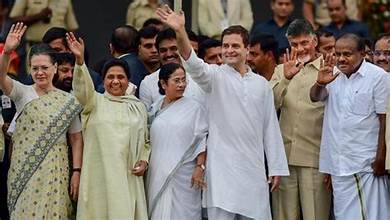
    In the realm of Indian politics, the landscape is ever-changing, especially in the lead-up to the Lok Sabha elections. Parties are continually shifting alliances, leaving behind erstwhile partners to forge new connections in pursuit of electoral success. This dynamic churn in political affiliations underscores the intricate dance of power and strategy that defines the Indian political arena.

    The Dynamics of Alliance Formation

    Before delving deeper into the current landscape of political alliances, it’s crucial to understand the underlying motivations driving these shifts. With each party eyeing electoral victories and the coveted seats in the Lok Sabha, alliances play a pivotal role in consolidating support bases and maximizing electoral gains.

    Parting Ways: A Prelude to New Alliances

    In recent months, several parties have severed ties with their erstwhile allies, setting the stage for new alignments. Some have distanced themselves from the Indian National Congress-led United Progressive Alliance (UPA), while others are actively charting a separate path, aiming to carve out their unique political trajectories. Simultaneously, discussions are underway between various parties and the Bharatiya Janata Party (BJP)-led National Democratic Alliance (NDA), indicating a potential realignment of political forces.

    The BJP’s Ongoing Dialogues with Regional Players

    Notably, discussions between the BJP and regional players are ongoing, with the Rashtriya Lok Dal (RLD) being one of the key interlocutors. Meanwhile, the Bahujan Samaj Party (BSP) appears to be facing a setback, with indications of strained relations. In Punjab, the Shiromani Akali Dal (SAD) stands as the sole ally of the BSP. However, insider sources suggest that the SAD is once again exploring the possibility of aligning with the BJP-led coalition, signaling a potential realignment in the offing.

    Exploring Alliance Possibilities: BJP and Shiromani Akali Dal

    Negotiations between the BJP and the Shiromani Akali Dal are reportedly in the final stages, with both parties deliberating over the contours of a prospective alliance. Should this alliance materialize, it would mark a significant political development, particularly for the Shiromani Akali Dal, which has a history of collaboration with the BJP. From 1997 until September 2020, the Akali Dal remained a steadfast ally of the BJP, underscoring the deep-rooted ties between the two parties.

    Mayawati’s Strategic Decision

    However, for Mayawati, the prospect of the Shiromani Akali Dal rejoining the NDA poses a considerable challenge. In the lead-up to the Punjab Legislative Assembly elections, Mayawati’s Bahujan Samaj Party had forged an alliance with the Akali Dal. While this alliance failed to yield significant electoral dividends in the recent polls, both parties remained committed to exploring future collaboration.

    Future Prospects: The Road Ahead

    As the political landscape continues to evolve, the decisions made by key players will shape the trajectory of Indian politics in the months to come. With alliances being forged and broken in pursuit of electoral success, the dynamics of power-sharing and coalition-building remain at the forefront of political discourse. In this ever-changing landscape, adaptability and strategic maneuvering are paramount for parties vying for supremacy in the corridors of power.

  • Empowerment Through Elections: Women Contesting in Pakistan’s National Assembly Elections

    Empowerment Through Elections: Women Contesting in Pakistan’s National Assembly Elections

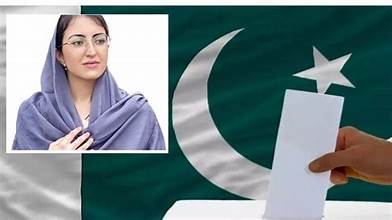
    In Pakistan, the culmination of anticipation has arrived as the nation prepares for elections on Thursday, February 8, 2024. Among the frontrunners in the race is former Prime Minister Nawaz Sharif. Approximately 150 parties are testing their fortunes in the general elections, with nearly 6,500 candidates vying for victory. Notably, male candidates dominate the electoral landscape, yet many female contenders have also stepped onto the battlefield. According to media reports, approximately 5% of women are presenting their candidacy in the general elections.

    Women’s Participation in Politics: Breaking Barriers in Pakistan

    Under Pakistan’s constitution, certain seats are reserved for women in both provincial and national assemblies. However, parties seldom grant women the permission to contest outside those quotas. Ahead of the elections, AFP conducted a special interview with three female candidates striving for victory, outlined as follows:

    1. Islamic Influencer: Jebe Vakar

    Jebe Vakar, a prominent Pakistani female YouTuber, commands a substantial following on social media platforms. Although she’s a novice in electoral politics, she’s making her debut in the arena, representing the Jamaat-e-Islami, a South Asian Islamic political party.

    Through her social media accounts, Jebe engages Pakistani women daily, enlightening them about their rights according to Islamic principles. Not only does she advocate for women’s rights, but she also shares insights into Islamic history.

    In response to AFP’s queries, Jebe expressed her preference for Facebook and YouTube, where she interacts with her fans regularly, addressing their inquiries and concerns.

    Jebe believes in not confining the teachings of the Quran but spreading them through platforms like Instagram, Facebook, Twitter, and WhatsApp groups. If successful in the general elections, she intends to champion the cause of women’s empowerment by advocating for robust legislation against gender oppression.

    2. Triumph Over Tragedy: Samar Haroon Bilour

    Samar Haroon Bilour is hailed as a torchbearer of youth aspirations in Pakistan. Addressing dozens of men in a room, she discussed her party’s plans during the 2018 elections. However, her name and image were conspicuously absent from banners during the campaign.

    In an interview with AFP, Bilour revealed the challenges she faced during the elections. Prior to the polls, terrorists had assassinated her husband. Despite the grim circumstances, she propelled her late husband’s campaign forward.

    Samar Haroon Bilour attributes her husband’s assassination to the Taliban, the most formidable and active terrorist organization in the region. For some time, they had control over several areas in the region.

    3. Interfaith Advocate: Savera Prakash

    Savera Prakash, a Hindu woman, possesses considerable knowledge about political affairs. Recently, she earned a bachelor’s degree in medicine. Her father follows Sikhism, while her mother adheres to Christianity. Prakash firmly believes that no religion advocates for wrongdoing; rather, each encourages individuals to engage in virtuous deeds.

    Prakash’s profound statement underscores her resilient mindset, emphasizing the importance of goodness irrespective of religious affiliations.

  • Ayodhya, Mathura, and Varanasi: The Cultural Nexus of India

    Ayodhya, Mathura, and Varanasi: The Cultural Nexus of India

    Unveiling the Millennia-Old Struggles in Ayodhya

    In the heart of Ayodhya unfolds a saga of five centuries of struggle, reverberating before the eyes of the world. Devotees of Lord Rama have found solace in their beloved deity. Every day, hundreds of devotees flock to catch a glimpse of their revered Lord Rama, while the echoes of “Har Har Mahadev” resonate in the knowledgeable city. Following the court’s verdict, the devotees of Lord Shiva have gained the right to worship their deity. Meanwhile, in Mathura, awaits the sacred land of Lord Krishna’s birth. Today, in the Uttar Pradesh Legislative Assembly, Chief Minister Yogi Adityanath delivered an extensive speech. However, amidst his words and gestures, he couldn’t refrain from speaking about the issues of Mathura and Varanasi, likening the current political landscape to the epic Mahabharata.

    Echoes of the Past: Drawing Parallels with the Mahabharata

    “We have merely asked for places,” remarked CM Yogi, drawing a comparison with the tale of the Mahabharata, where the Pandavas sought only five villages from Duryodhana, which he refused to grant. “We have only asked for three places,” reiterated CM Yogi, referring to Ayodhya, Varanasi, and Mathura. He emphasized that these places hold special significance for Hindus and any disrespect towards their sanctity would be unprecedented in the world.

    Longing for Lord Krishna’s Arrival

    He expressed his belief that the ongoing developments should have occurred soon after India’s independence in 1947. “We have only asked for three places. There are no issues with other places,” he stated firmly. CM Yogi highlighted the festivities in Ayodhya, where devotees broke barricades at night, echoing Nandi Baba’s question, “Why should we wait?”. He pondered, “Where are our beloved Krishna Kanhaiya to be acknowledged?”

    Ayodhya: A Non-Negotiable Stand by CM Yogi

    From CM Yogi’s statements, it’s evident that without the inclusion of Varanasi and Mathura, Ayodhya’s resolution is improbable. It’s also apparent that CM Yogi has made preparations for Varanasi and Mathura. It’s speculated that due to constitutional responsibilities, the Yogi government might not overtly present itself in this matter, but it won’t step back from fostering this entire movement.

    Significance of Varanasi and Mathura

    Delving into Mathura, it holds the distinction of being the birthplace of Lord Shri Krishna. It’s believed that the site where the Shahi Eidgah Mosque stands today was once the prison of Kansa, where Lord Krishna was born. Later, a temple was built on that site, which was demolished and replaced with a mosque during Aurangzeb’s reign.

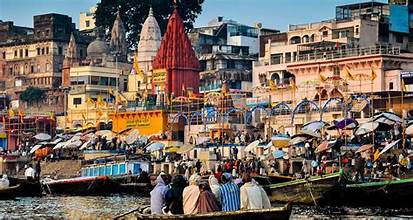
    Turning to Varanasi, its mention can be found even in the Skanda Purana. Legend has it that Lord Shiva resided there. In ancient times, many foreign travelers visiting India also mentioned the grand Vishwanath Temple in Kashi, attracting pilgrims from various parts of the country. Despite Aurangzeb’s orders to demolish the temple, it stood as a symbol of resilience.

    The Krishna Janmabhoomi-Eidgah Dispute: Unraveling the Tangle

    The Hindu side accuses the Muslim side of demolishing the temple to construct the mosque in Mathura. They claim that the walls of the mosque bear the serpent symbol and the revenue records list the entire land under the name of the temple trust. The Hindu demand is to vacate the Shahi Eidgah Mosque and hand over the land for the construction of the grand Krishna temple.

    Genesis of the Eidgah Dispute

    This entire issue is entwined with the ownership rights of 13.37 acres of land. In 1968, there was a settlement between the Janmasthan Seva Sangh and the Eidgah Trust. 10.9 acres were allocated to the Krishna Janmabhoomi, leaving 2.5 acres for the Shahi Eidgah. The Hindu side argues that the Janmasthan Seva Sangh had no right to allocate the temple land to anyone, hence, the settlement should be revoked, and the disputed area should be given to the temple premises.

  • अवैध मस्जिद और मदरसे के अतिक्रमण, पुलिस पर पथराव, हल्द्वानी में कर्फ्यू, देखते ही गोली मारने का आदेश, सीएम की हाई लेवल मीटिंग

    अवैध मस्जिद और मदरसे के अतिक्रमण, पुलिस पर पथराव, हल्द्वानी में कर्फ्यू, देखते ही गोली मारने का आदेश, सीएम की हाई लेवल मीटिंग

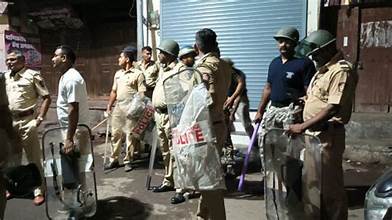
    उत्तराखंड के हल्द्वानी में अवैध मस्जिद और मदरसे के अतिक्रमण हेतु पहुंची टीम पर उपद्रवियों ने जमकर पथराव किया और कई जगह आगजनी की। उपद्रवियों पर नियंत्रण कसने हेतु धामी सरकार ने त्वरित एक्शन लेते हुए- हल्द्वानी में कर्फ्यू लगवा दिया, उपद्रवियों को देखते ही गोली मरने का आदेश दिया और पुलिस को उपद्रवियों से निपटने के लिए सख्ती बरतने को कहा।

    कहां की है घटना:

    घटना उत्तराखंड के वनभूलपुरा के मालिक का बगीचा की नूजल भूमि का है। कोर्ट के आदेश के बाद नगर निगम की टीम ने अतिक्रमण कार्य आरम्भ किया था। नमाज स्थल और मदरसे का अतिक्रमण आरम्भ हुआ तो तनाव की स्थिति बन गई। उपद्रवियों ने अतिक्रमण करने गई टीम पर पथराव आरम्भ कर दिया। पुलिस ने लाठी चार्ज से स्थिति काबू करनी चाही लेकिन हालत हाथ से निकल गए। दर्जनों गाड़ियों को आग के हवाले कर दिया गया। पुलिस थाना फूंक दिया गया। हिंसा में अब तक 6 लोगों की मौत हो चुकी है। जबकि 300 लोगों के घायल होने की पुष्टि हुई है।

    हल्द्वानी की बिगड़ी स्थिति देख प्रशासन सख्त है। कई कॉलेजों में परीक्षाओं को निरस्त किया गया है। आदेश है की स्थिति सामान्य होने पर परीक्षा करवाई जाएंगी। आईजी नीलेश आनंद भारणे के मुताबिक अर्धसैनिक बल की चार कंपनियों को हिंसा प्रभावित इलाके में भेजा जा चुका है। स्थिति को नियंत्रित करने का हर सम्भव प्रयास किया जा रहा है।

  • Potential Political Turmoil in Bihar: Will Nitish Kumar Secure Majority in the Assembly?

    Potential Political Turmoil in Bihar: Will Nitish Kumar Secure Majority in the Assembly?

    The recent formation of the NDA government in Bihar has sparked speculation about the upcoming floor test scheduled for February 12th in the Bihar Legislative Assembly. This test holds significant importance as it will determine the majority status of the Nitish Kumar-led government. Meanwhile, Tejashwi Yadav has already hinted at forthcoming political maneuvers, suggesting that the game is far from over. As anticipation builds, questions arise regarding the potential outcomes and the strategies of key players.

    Nitish Kumar’s Latest Move

    On January 28, 2024, Nitish Kumar secured the support of 128 legislators as he took oath as the Chief Minister for the ninth time. Among these supporters, 78 belong to the BJP, 45 to the JD(U), with one independent legislator and four from Jitan Ram Manjhi’s party, ‘HAM,’ also extending their support. With a majority mark set at 122, Nitish Kumar’s government currently holds a comfortable lead of six legislators. However, amidst claims from the RJD camp about their outreach efforts and alleged absenteeism of JD(U) members, concerns loom over the potential outcome of the impending floor test.

    Expert Analysis: Arun Kumar Pandey’s Insights

    Political analyst Arun Kumar Pandey offers valuable insights into the unfolding scenario. He suggests that while discussions among various parties indicate an upcoming showdown, these may merely be political posturing. Pandey outlines the sequence of events, noting that preceding the floor test on February 12th, the Governor’s address to the Assembly will take place. Subsequently, a motion of no confidence against the Speaker will be tabled. Pandey speculates that if the current Speaker, Avadh Bihari Chaudhary, receives support in the event of a vote, it will signal trouble for the Nitish Kumar government.

    Possibility of an RJD-led Government?

    Contrary to some speculations, Pandey dismisses the likelihood of an RJD-led government formation. He asserts that any such development would not occur without Nitish Kumar’s prior knowledge. Furthermore, Pandey emphasizes that if Nitish Kumar appears in the Assembly on February 12th, it would quell many speculations. However, should a few NDA legislators fail to attend, the government’s stability may be at risk. While the formation of an RJD-led government seems improbable, Pandey suggests that even if a few JD(U) or BJP legislators defect, it could destabilize the current political equilibrium.

    Potential Party Defections: Impact on Bihar’s Political Landscape

    Pandey explains the intricate dynamics involved in the event of JD(U) or BJP legislators abstaining from the floor test and refusing to support the government. According to parliamentary norms, defection by one-third of the legislators warrants a change in party affiliation, a scenario currently unlikely. However, even a minor exodus could jeopardize the Nitish Kumar-led government. Consequently, the prospect of a President’s rule looms large over Bihar. Ultimately, Pandey concludes that despite the ongoing speculations, Nitish Kumar’s government is likely to emerge victorious in the upcoming floor test, consolidating its majority status.

  • Valentine’s Day: A Controversial Celebration in Pakistan and Islamic Nations

    Valentine’s Day: A Controversial Celebration in Pakistan and Islamic Nations

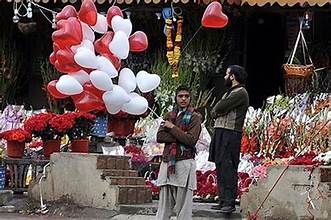
    Valentine’s Day, celebrated worldwide by young lovers expressing affection for each other, takes on a different connotation in some countries, notably in our neighboring nation, Pakistan. In Pakistan, this day is observed as “Haya Day,” deviating significantly from the conventional Valentine’s celebrations. Understanding the reasons behind this might surprise you.

    Why Valentine’s Day is Not Celebrated in Pakistan?

    In Pakistan, Valentine’s Day is frowned upon due to its perceived conflict with Islamic teachings. Opposition against this celebration has been persistent due to its perceived association with Western culture. In 2018, a Pakistani citizen petitioned the Islamabad High Court, arguing that Valentine’s Day is rooted in Western culture and goes against Islamic teachings. Subsequently, the court imposed a ban on Valentine’s Day celebrations in Pakistan. However, this decision faced resistance from some segments of Pakistani society.

    Rallies Against Valentine’s Day

    Social and religious organizations in Pakistan organize rallies against Valentine’s Day, advocating against its observance. Additionally, Valentine’s Day is reframed as “Vich Day” or “Haya Day” to discourage youth participation in what is seen as a Western import.

    Countries Prohibiting Valentine’s Day Celebrations

    Pakistan isn’t the only country where Valentine’s Day faces prohibition. Islamic nations such as Saudi Arabia, Iran, Uzbekistan, and Malaysia also restrict the observance of Valentine’s Day. This cultural event is considered emblematic of Western civilization and is seen as contradictory to Islamic values, leading to widespread opposition in Islamic countries.

    Cultural Clash and Religious Concerns

    The clash between Western customs and Islamic principles underpins the resistance to Valentine’s Day in many Islamic nations. The perception that Valentine’s Day promotes values contrary to Islamic teachings fuels opposition within these societies. Consequently, these countries enforce bans or restrictions on Valentine’s Day celebrations to uphold their cultural and religious norms.

    Conclusion

    The controversy surrounding Valentine’s Day in Pakistan and other Islamic countries underscores the complexities of cultural integration and religious sensitivity in today’s globalized world. While Valentine’s Day remains a cherished celebration in many parts of the world, its reception in countries like Pakistan highlights the ongoing tension between tradition and modernity, local customs, and global influences.