Category: national

  • Unveiling Snake Fears: What Scares Snakes the Most?

    Unveiling Snake Fears: What Scares Snakes the Most?

    Snakes, often considered perilous venomous creatures, evoke a sense of fear when spotted in or around homes. The instinct to keep a safe distance arises from the potential danger they pose, with their ability to strike unexpectedly. Interestingly, while humans fear snakes, these slithering reptiles harbor fears of their own. Let’s delve into the factors that trigger fear in snakes and explore what they dread the most.

    The Intricate Web of Snake Fear

    According to studies, snakes primarily fear other snakes, especially those from different species. This fear is rooted in the territorial nature of snakes, leading to frequent confrontations between them. It’s noteworthy that certain snake species, like the King Cobra and Viper, exhibit a fearless disposition towards other snakes. These species are known for their aggressive nature, swiftly attacking when they sense a threat.

    Predators in the Wild: Snakes’ Fear of Larger Prey

    Snakes, despite preying on smaller animals, fear larger predators in the wild. To evade potential threats, snakes often seek refuge in burrows or holes during the day, emerging at night in search of food. When sensing danger, snakes release a pungent fluid from their glands as a defense mechanism. Additionally, they attempt to intimidate predators by hissing and striking, deterring them from potential attacks. Some predators like hawks, eagles, foxes, mongooses, and raccoons are adept at hunting snakes.

    Illuminating Fear: Snakes and Bright Lights

    Snakes are highly sensitive to light, and their eyes are adapted for nighttime vision. Consequently, they tend to avoid brightly lit areas, as excessive light can temporarily blind them. Interestingly, snakes may become disoriented or blinded by intense light, further instilling fear in them.

    Sonic Dread: The Fear of Loud Noises

    Snakes rely on their acute hearing abilities to locate prey and avoid predators. Loud noises can disrupt their hunting and make them feel vulnerable. Research suggests that sudden loud sounds prompt snakes to seek safety, fleeing to secure locations away from potential threats.

    Odorous Terrains: Snakes’ Aversion to Strong Smells

    Snakes exhibit a heightened aversion to strong odors, impacting their ability to navigate and locate prey. Scents like garlic, lemon, cinnamon, and mint are particularly unsettling for them. Consequently, snakes tend to avoid areas with overpowering fragrances, as these scents interfere with their hunting instincts.

    Fear Beyond the Scales: Snakes and Other Animals

    Certain animals evoke fear in snakes, considering them natural predators. Dogs, cats, lizards, birds of prey like hawks and owls, and mammals like foxes and raccoons are viewed as potential threats by snakes. Cats, in particular, are known for their agility in hunting and capturing snakes.

    Fire Phobia: Snakes and the Dread of Flames

    Snakes are inherently afraid of fire, given their delicate scales and susceptibility to burns. The vulnerability of their skin to high temperatures makes snakes steer clear of areas prone to fire. The threat of severe skin damage or even death is a compelling deterrent, leading snakes to avoid places with open flames or high temperatures.

  • The Vital Importance of Wetlands: A Global Perspective

    The Vital Importance of Wetlands: A Global Perspective

    Wetlands, where water meets land, are unique ecosystems found across the globe. These areas play a crucial role in maintaining the delicate balance of our planet’s environment. Recognizing the significance of wetlands, World Wetlands Day is observed every year on the 2nd of February.

    The Necessity of Wetlands

    Wetlands are essential because they contribute to reducing water pollution and fostering the development of both fauna and flora. These areas are often rich in plant life, including medicinal plants used in the production of various medicines.

    Celebrating World Wetlands Day

    World Wetlands Day can be celebrated in various settings, from the shores of lakes and ponds to the banks of rivers and oceans. Any land consistently submerged in water throughout the year qualifies as wetland. The purpose of observing World Wetlands Day on February 2nd is to raise awareness about the importance of wetlands globally and to emphasize the need to preserve these vital ecosystems.

    When is World Wetlands Day Celebrated?

    The inaugural celebration of World Wetlands Day took place on February 2, 1971, during the Wetland Convention held in Ramsar, Iran. The convention was officially adopted in 1975, and the first World Wetlands Day was celebrated on February 2, 1997. India, recognizing the significance of wetlands, signed the convention in 1982.

    India’s Chilika Lake: A Recognized Wetland

    Wetlands come in various forms, including coastal wetlands with saline water and mangroves, estuaries, and lagoons. On the other hand, inland wetlands consist of lakes, ponds, marshy lands, and riverbanks prone to flooding. Additionally, human-made wetlands, such as fishponds, salt pans, and paddy fields, serve various purposes. Notably, Ramsar, Iran, and Chilika Lake in Odisha, India, are recognized as Wetlands of International Importance by UNESCO.

    Chilika Lake, along with four other wetlands in India, is part of UNESCO’s list of heritage sites. Since these wetlands are crucial for both nature and wildlife, various programs and events are organized globally on February 2nd to educate the public about their importance and encourage conservation efforts.

  • Jharkhand Political Shift – Champai Soren Takes Charge

    Jharkhand, a state entwined in political intrigue, witnessed a seismic shift as Hemant Soren, former Chief Minister, faced arrest by the Enforcement Directorate (ED) in connection with land scams. This development prompted his resignation from the chief ministerial post. In his stead, Champai Soren is set to take the oath as the new CM.

    The Soren Dynasty: An Unsettling Legacy

    Champai Soren’s ascent to the Chief Minister’s position raises skepticism within the ranks of the Jharkhand BJP. Pratul Shahdev, the spokesperson for the state BJP, doubts any substantial change in Jharkhand’s structure or condition under Champai Soren’s leadership. The Soren family carries a dubious record of corruption allegations amounting to a staggering ₹70,000 crores during their first four years in government. Given this track record, the prospect of significant change appears bleak. Nonetheless, we extend our best wishes to the new Chief Minister, hoping for adherence to the rule of law and a departure from the alleged mineral wealth exploitation and land plunder that occurred under Hemant Soren’s administration.

    The Swearing-In Ceremony: A Glimpse into the Future

    The swearing-in ceremony for Champai Soren as the Chief Minister of Jharkhand is scheduled for 12:15 PM in Ranchi. The Governor extended an invitation on Thursday for the formation of the new government.

    Coalition Dynamics: A Crucial Support Base

    The Mahagathbandhan enjoys the backing of 43 legislators, with 24 from JMM, 17 from Congress, and one each from AJSU and CPI(ML).

    Congress’s Stipulation and the Rahul Gandhi Connection

    Rajesh Thakur, the Congress state president, granted Champai Soren a 10-day window to prove his government’s majority. Congress, a crucial ally in the JMM-led coalition, ensures stability. When queried about Champai Soren’s swearing-in, Thakur assured that they would ensure the oath-taking ceremony occurs by Friday afternoon, preceding Rahul Gandhi’s ‘Bharat Jodo Nyay Yatra’ in the state.

  • Unveiling the Fiscal Landscape: Delhi’s Budget Allocations Critiqued

    Unveiling the Fiscal Landscape: Delhi’s Budget Allocations Critiqued

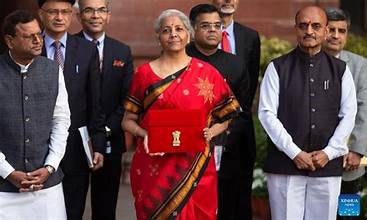
    In a significant revelation, Finance Minister Nirmala Sitharaman has allocated a mere ₹1,168 crore for the National Capital Region, Delhi, in the interim budget. The Aam Aadmi Party-led Delhi government has accused the central government of displaying stepmotherly treatment regarding budget allocation. Atishi, the Finance Minister of Delhi, took a jibe at the BJP, asserting that the budget proves it’s a government of empty promises. Prime Minister Modi had pledged to create 2 crore jobs annually back in 2014, yet, over the past 10 years, a staggering one crore people have been left unemployed.

    Allegations of Deceptive Tactics

    Atishi claims that Finance Minister Nirmala Sitharaman has presented a new ‘jumla’ (empty rhetoric) in the interim budget, stating that they will generate 55 lakh jobs. However, no steps have been taken to mitigate inflation. The Delhi government argues that considering the amount of tax the citizens contribute, the central government should have allocated ₹15,000 crores to Delhi. Although the Center has provided funds to all local bodies, the Municipal Corporation of Delhi (MCD) has received nothing, not even a single rupee.

    She criticized the BJP-led central government, stating that it thrives on hollow promises. According to Atishi, “The government has allocated ₹16,000 crores to urban local bodies, but there is no provision for MCD. They have no funds for the Delhi government or MCD.”

    Exclusion from Central Grants

    It’s worth noting that there is no provision for any central grant for Delhi this time. Finance Minister Nirmala Sitharaman presented the interim budget on Thursday, allocating ₹1,168.01 crores for the financial year 2024-25. In the budget for 2022-23, Delhi was allocated ₹960 crores, and this was increased to ₹1,168.01 crores for the year 2023-24. Surprisingly, this time, there was no increase in the budget for Delhi. There is no allocation in return for Delhi’s contribution to central taxes and duties. In the budget for 2022-23, this share was ₹325 crores.

  • Transformative Boost: Modi Government’s Bold Move to Strengthen India’s Infrastructure

    Transformative Boost: Modi Government’s Bold Move to Strengthen India’s Infrastructure

    Modi government has declared a substantial increase in the budget to fortify the foundational framework of the nation. Finance Minister Nirmala Sitharaman, unveiling an 11.1% surge in the infrastructure budget, has elevated it to a staggering 11.11 trillion rupees, constituting 3.4% of the GDP.

    Paving the Way for World-Class Infrastructure

    Emphasizing the resilience of the fundamental structure, the Finance Minister has decided to consecutively enhance the Capital Expenditure budget for the fourth year. With the infrastructure budget bolstered by 11.1%, reaching 11.11 trillion rupees, it accounts for 3.4% of the GDP.

    Construction of Three Economic Railway Corridors

    With the anticipation of an increased Capital Expenditure budget, there is a prevailing expectation that the government’s focus is set on strengthening the railway infrastructure in conjunction with the robustness of the foundational framework. The implementation of three major economic railway corridor programs, including Energy, Minerals, and Cement Corridors, is in the pipeline. Additionally, initiatives for port connectivity and high-density corridors are in the works.

    Transformation of 40,000 Bogies to Vande Bharat Standard

    Under the ambit of Prime Minister’s Gati Shakti for multi-modal connectivity, these projects are identified to alleviate logistics costs in the country. These endeavors are poised to ameliorate passenger train operations by alleviating congestion in high-traffic corridors. This not only ensures the safety of rail travel but also facilitates an increase in train speeds. Finance Minister announced a conversion plan for 40,000 normal bogies to the Vande Bharat standard, aiming to enhance the safety and comfort of rail travel.

    Potential Expansion in the Full Budget

    A provisional provision of 11.11 trillion rupees has been earmarked in the interim budget. However, with the presentation of the full budget after the formation of the new government, this amount might witness an augmentation. In the previous year’s budget for 2023-24, a provision of 10 trillion rupees was allocated for capital expenditure.

  • Financial Empowerment: Exploring the Impact of Lakhpati Didi Yojana

    Financial Empowerment: Exploring the Impact of Lakhpati Didi Yojana

    Lakhpati Didi Yojana: In a groundbreaking move, Finance Minister Nirmala Sitharaman has unveiled the interim budget for the year 2024, placing a special emphasis on women’s empowerment in her address. The government’s commitment to strengthening the socio-economic fabric of the nation is evident in every step taken. Amidst these initiatives, the Finance Minister highlighted the Lakhpati Didi Yojana, expressing the government’s dedication to uplifting women across the country. Let’s delve into the details of the Lakhpati Didi Yojana, its objectives, and the myriad benefits it brings.

    Understanding Lakhpati Didi Yojana

    The Lakhpati Didi Yojana, initiated by the Modi government, aims to empower economically disadvantaged women. The scheme envisions bringing forward women from financially marginalized backgrounds. During her budget speech, the Finance Minister proudly shared that the Lakhpati Didi Yojana has transformed the lives of nine crore women, making them self-reliant.

    Key Benefits of Lakhpati Didi Yojana

    1. Financial Literacy Workshops

    Comprehensive financial literacy workshops are conducted to strengthen women’s financial knowledge. These workshops cover essential topics such as budgeting, savings, and investments, empowering women with crucial financial insights.

    2. Incentives for Savings

    The scheme motivates women to save by offering incentives, encouraging a culture of financial discipline and stability among the beneficiaries.

    3. Microcredit Facilities

    Lakhpati Didi Yojana provides women with microcredit facilities, facilitating access to small loans. This empowers them to initiate and sustain small-scale enterprises.

    4. Skill Development and Vocational Training

    The scheme prioritizes skill development and vocational training, guiding aspiring women entrepreneurs in starting their businesses. This emphasis on skill enhancement opens doors to economic opportunities.

    5. Financial Security

    Women enrolled in the program receive financial security through affordable insurance coverage, ensuring the well-being and safety of their families.

    6. Digital Banking Promotion

    Lakhpati Didi Yojana encourages women to embrace digital banking services, mobile wallets, and other digital platforms for financial transactions, fostering a technologically advanced financial landscape.

    7. Empowerment Programs

    Various empowerment programs are implemented under this scheme, boosting the confidence of women participants and fostering a sense of self-reliance.

    Public Reaction to Lakhpati Didi Yojana

    Manish Khemka, Chairman of the Global Taxpayers Trust and member of the GST Grievance Redressal Committee, commended the self-assured nature of the Modi government’s budget. He noted that the budget has been crafted with confidence, considering the youth, taxpayers, and the economically disadvantaged. A significant aspect is the government’s commitment to not burdening the revenue, with the ambitious goal of achieving a net zero target by 2070. The relief provided to one crore taxpayers in the middle-income bracket and those facing old tax demands is a pivotal decision that promises respite.

  • Unveiling the Spiritual Heritage: Vyasa Family’s Reverence in Knowledge City

    Unveiling the Spiritual Heritage: Vyasa Family’s Reverence in Knowledge City

    In a landmark decision by the district and session court in Varanasi, regular worship has resumed at the workshop of Vyasa Ji in Gyanvapi. This revival echoes the practices that prevailed before 1993. Now, the Vyasa family will once again perform rituals in the workshop, where prior to 1993, it was the Somnath Vyasa family engaging in devotional activities.

    Rediscovering Vyasa Ji’s Workshop in Gyanvapi

    Situated on the ground floor in Gyanvapi, the workshop boasts Hindu symbols like Swastika, Lotus, and Om, deeply connected to the Hindu faith. Last year, on September 25th, a petition was filed by the Vyasa family seeking permission for worship in the workshop. Following this, an investigation took place as part of the ASI survey, revealing evidence of a temple inside the workshop. Subsequently, the court granted permission for worship in Vyasa Ji’s workshop. Dr. Ajay Krishna Vishwesh, the judge at the district court, has given the administration a week to facilitate worship in Vyasa Ji’s workshop.

    Understanding Vyasa Ji’s Workshop

    Before 1993, the Vyasa family, through their descendant Ashutosh Vyasa, reveals that there are ten workshops within Gyanvapi. Vyasa Ji’s workshop is located to the south within Gyanvapi, where two out of the ten workshops have been opened. According to court records, Vyasa Ji’s workshop stands directly in front of the Nandi idol, a sacred place where the Vyasa family has performed worship in the Shaiv tradition for 400 years. Even during the British era, the Vyasa family retained control over the workshop after winning a legal battle.

    The Ceasing of Worship: A Political Directive

    Ashutosh Vyasa explains that in 1993, during the tenure of the Samajwadi Party government with Mulayam Singh Yadav as the Chief Minister, Vyasa Ji’s workshop was closed and barricaded. This was done to prevent any communal tensions related to the Ayodhya Ram Janmabhoomi case. Initially, temporary barricades were set up, and later, the workshop was permanently closed. Since then, worship has been prohibited.

    Ashutosh Vyasa recalls, “Earlier, our family members used to perform worship and rituals. We used to go inside every year. Inside, there is the Ramcharitmanas in Gyanvapi, along with bamboo sticks. It is quite dark inside.” He also mentions the presence of several Shiva Lingams and broken Nandi idols inside. The sculptures include depictions of Lotus, Swastika, and Om on the pillars. Before 1993, ablution rituals and Rudrabhishek were performed, along with regular prayers and hymns conducted three times a day.

    Legal Petition and Court’s Verdict

    On September 25, 2023, Shailendra Thakur Pathak, a member of the Vyasa family, filed a plea to restart worship in Vyasa Ji’s workshop. Being a direct descendant of the Vyasa family, Pathak requested the court to appoint a receiver to control the worship activities in the workshop and manage its affairs. It was argued that regular worship of the deities present in the workshop was essential. The survey also revealed symbols and evidence of a temple connected to Hinduism. Following this, on January 17, 2024, the court appointed a receiver but did not pass any orders related to worship. After hearing both sides on January 31, the court granted permission to the Hindu side for worship in Vyasa Ji’s workshop.

    Vyasa Family’s Response to the Court’s Verdict

    Ashutosh Vyasa expressed immense happiness at the court’s decision, stating that the 400-year wait had finally ended. He mentioned, “This is the sacrifice of our ancestors, who have been fighting for 400 years. The workshop had its rights. Worship used to happen here before 1993.”

    In the wake of the court’s decision on January 31, the administration implemented the order after an 11-hour meeting, and the Deepam (lighting of lamps) ceremony took place in Vyasa Ji’s workshop around 2:30 AM. This marked the first time in 31 years that lamps were lit inside the workshop. From February 1st onwards, regular worship has resumed, bringing back the spiritual vibrancy that was absent for over three decades.

  • Opposition alliance: कांग्रेस के नेतृत्व से धड़ाम हुआ विपक्षी गठबंधन

    Opposition alliance: कांग्रेस के नेतृत्व से धड़ाम हुआ विपक्षी गठबंधन

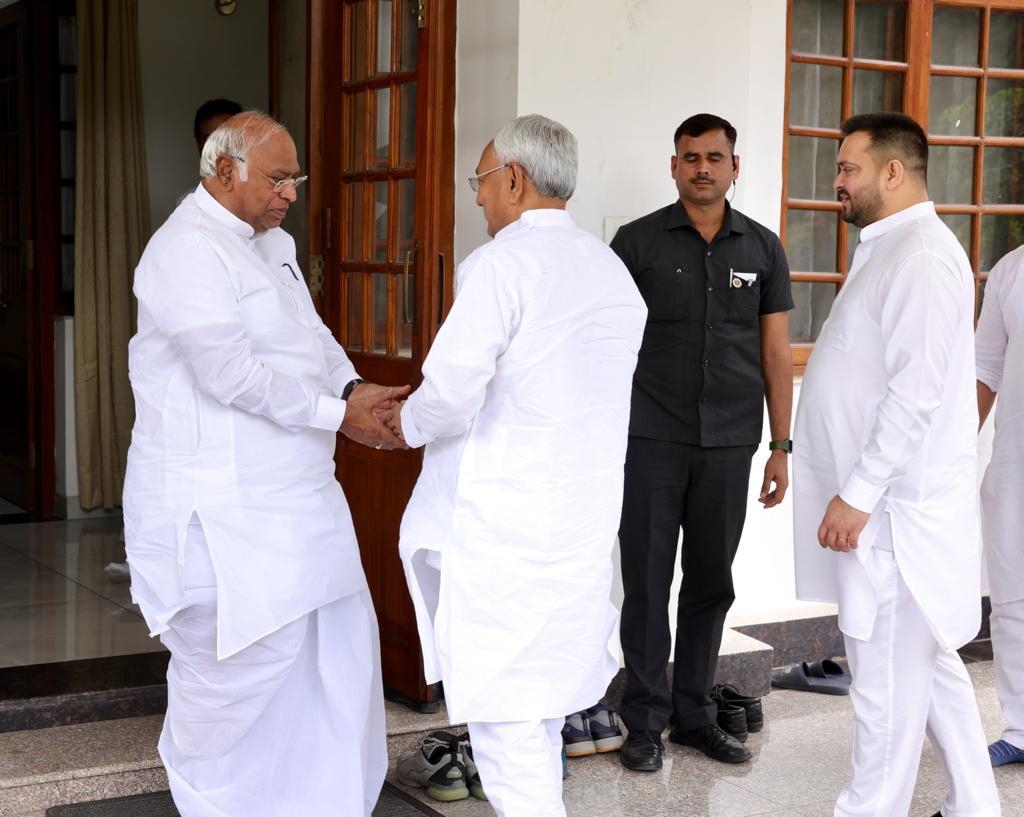
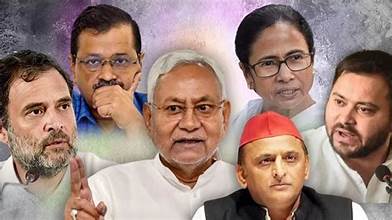
    Opposition alliance: लोकसभा चुनाव में मोदी को हराने के लिए विपक्ष के कई क्षेत्रीय दलों ने एकजुटता दिखाते हुए इण्डिया गठबंधन बनाया। जुलाई में बना इण्डिया गठबंधन आपसी खींचातानी से जूझता रहा और 2024 की जनवरी में बिखरने लगे। ममता बनर्जी ने पश्चिम बंगाल में कांग्रेस के साथ सीट शेयरिंग करने से इनकार कर दिया तो बिहार के सीएम और इण्डिया गठबंधन के सूत्रधार नीतीश कुमार ने पुनः पाला बदल कर बीजेपी से हाथ मिला लिया। नीतीश के बीजेपी में शामिल होने से यह खबरें हवा में खूब उड़ रहीं हैं कि कांग्रेस का नेतृत्व गठबंधन को धारशायी कर रहा है। वही अब सवाल यह उठता है क्या नीतीश के जाने से इण्डिया गठबंधन को होगा नुक्सान –

    भारतीय राजनीति पर शोध करने वाले जाइल्स वेर्नियर कहते हैं- बीजेपी की वर्तमान स्थिति बेहतर है। राम लहर में मोदी का विकास कार्य घर -घर पहुंच गया है। पांच राज्यों में हुए विधानसभा चुनाव में बीजेपी ने तीन राज्यों में चुनाव जीत कर साबित कर दिया। जनता मोदी की विकास नीतियों के पक्ष में खड़ी है। ऐसे में नीतीश कुमार का बीजेपी में पुनः शामिल होना इण्डिया गठबंधन के लिए बुरा संकेत है। क्योंकि नीतीश कुमार गठबंधन के सूत्रधार थे। उनको इण्डिया की तरफ से पीएम पद का उम्मीदवार देखा जा रहा था। अब जब नीतीश ने इण्डिया गठबंधन से मुँह फेर लिया है तो संभावना यह भी है की आम आदमी पार्टी, तृणमूल कांग्रेस और अन्य क्षेत्रिय दल कांग्रेस के नेतृत्व पर सवाल उठाएंगे। क्योंकि सभी यह बात स्पष्ट रूप से जानते हैं कि बीजेपी की राम लहर में कांग्रेस की रीढ़ चरमरा गई है।

    थिंक टैंक सेंटर फॉर पॉलिसी रिसर्च से जुड़े राहुल वर्मा कहते हैं- बीजेपी बेहतर स्थिति में है। दिसम्बर से जनता के मध्य बीजेपी के लिए सकारात्मक वातावरण बन रहा है। राम मंदिर के उद्घाटन ने बीजेपी का नाम जन-जन के मुख पर ला दिया है। मोदी मय वातावरण बन रहा है। लोकसभा चुनाव में बीजेपी की जीत की अधिक संभावना बन रही हैं और जनता कहीं न कहीं कांग्रेस की नीति को नकार रही है।

    गठबंधन टूटने की वजह कांग्रेस:

    कांग्रेस देश की सबसे बड़ी राजनीतिक पार्टी है। हर राज्य में कांग्रेस पार्टी की शाख मौजूद है। लेकिन आज कांग्रेस का वोट बैंक कमजोर हो गया है। साल 2019 में हुए लोकसभा चुनाव में कांग्रेस को महज 20 फीसदी वोट हासिल हुए। विपक्ष के सभी दल यह जानते हैं की बड़ा दल होने के बाद भी कांग्रेस की जनता के बीच स्थिति बेहतर नहीं है और चुनाव में जो भी वोट शेयर इण्डिया गठबंधन का बढ़ेगा वह उनकी पार्टी के दम का होगा। ऐसे में विपक्ष के अन्य दल कांग्रेस का नेतृत्व स्वीकार नहीं कर पा रहे हैं और इण्डिया गठबंधन से दूरी बना रहे हैं।

    राजनीतिक जानकारों का कहना है कि कांग्रेस क्षेत्रिय दलों से अधिक सीट चाहती है। क्षेत्रिय दल कांग्रेस की स्थिति से परिचित हैं। उनका मानना है वह जीत के साथ जाना चाहते हैं न की डूबते हुए रथ के साथ। ऐसे में सभी इण्डिया गठबंधन से दूरी बनाकर स्वयं को मजबूत स्थिति में कर रहे हैं। मोटा – मोटा समझें तो विपक्षी दल कांग्रेस के नेतृत्व को नकार रहे हैं और कहीं न कहीं गठबंधन के धराशायी होने का कारण कांग्रेस का नेतृत्व है।

  • INDIA Alliance: इंडिया गठबंधन समाप्त, कांग्रेस के सहयोगी उससे अलग

    INDIA Alliance: इंडिया गठबंधन समाप्त, कांग्रेस के सहयोगी उससे अलग

    INDIA Alliance: विपक्षी गठबंधन इंडिया की हालत लोकसभा चुनाव से पूर्व ही पतली नजर आ रही है। एकजुटता के मंत्र के साथ चुनावी रण में उतरने को तैयार महागठबंधन चुनाव से पूर्व ही बिखर गया। गठबंधन के सूत्रधार नीतीश कुमार ने बीजेपी का दामन थाम लिया। पश्चिम बंगाल की सीएम ममता बनर्जी ने कांग्रेस के साथ सीट विभाजन से इनकार कर दिया, अखिलेश ने यूपी में कांग्रेस के लिए 11 सीट देने की घोषणा की। वही कई अन्य दलों ने कांग्रेस के नेतृत्व को नकार दिया। अब ऐसे में सत्ताधारी दल बीजेपी लगातार गठबंधन की चुटकी ले रहा है और अब विपक्षी दल के नेताओं ने भी अपने गठबंधन का मजाक बनाना शुरू कर दिया है।

    महा विकास अघाडी (MVA) की बैठक में शामिल वंचित बहुजन अघाडी (VBA) के नेता प्रकाश अंबेडकर ने इंडिया गठबंधन के अस्तित्व पर सवाल खड़े किये हैं। उन्होंने कहा- अब इंडिया गठबंधन का कोई अस्तित्व नहीं है। हम उस स्थिति को महाराष्ट्र में नहीं देखना चाहते जैसी स्थिति अन्य राज्यों में देखने को मिल मिल रही हैं। मेरी राय में अब इंडिया गठबंधन समाप्त है। उसका अस्तित्व नहीं है। कांग्रेस के सहयोगी उससे अलग हो रहे हैं।

    सूत्रों के हवाले से मुझे सूचना मिली है कि समाजवादी पार्टी भी कांग्रेस से अलग हो रही है। या अलग हो चुकी है। उम्मीद करते हैं ऐसा न हो लेकिन आंतरिक सूचनाओं के मुताबिक वह अलग हो चुके हैं। क्योंकि अखिलेश यादव भी अब अलग राह पर चल रहे हैं।

    संजय राउत ने इसपर कहा, “इंडिया मोर्चा पूरी तरह से जीवित है क्योंकि कांग्रेस और आम आदमी पार्टी (AAP) इस समय दिल्ली में सीट बंटवारे पर चर्चा कर रहे हैं। हमने सकारात्मक माहौल में बैठक की। हमारा उद्देश्य चुनाव में भाजपा को हराना है और इसलिए हम सर्वसम्मति से ऐसे कदम नहीं उठाने पर सहमत हुए हैं जिससे भाजपा को फायदा हो।

  • Unlocking Spiritual Spaces: TTD Considers Establishing a Platform for Non-Hindus

    Unlocking Spiritual Spaces: TTD Considers Establishing a Platform for Non-Hindus

    Embracing Diversity in the Heart of Tirumala

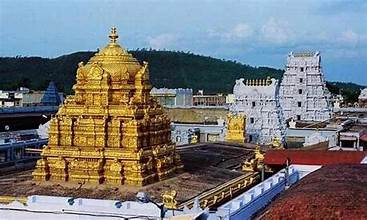
    In a recent revelation, the Tirumala Tirupati Devasthanam (TTD) expressed its intent to create a platform for those outside the Hindu faith who hold genuine reverence for the tenets of Sanatana Dharma and Lord Balaji. During this initiative, individuals will receive insights and training related to Hinduism and its practices.

    Pioneering Inclusivity: TTD Trust Board’s Vision

    Bhumana Karunakar Reddy, Chairman of the TTD Trust Board, declared that this platform would be a first of its kind in India, dedicated to providing non-Hindus with knowledge about Hinduism. The primary objective is to propagate the values of Hinduism and prevent religious conversions. Notably, Reddy has also extended support to the grand Ram Mandir project in Ayodhya.

    Announcing the Spiritual Initiative

    The announcement came during a religious program organized at the Asthana Mandapam in Tirumala. Reddy stated, “TTD is contemplating the establishment of a platform that will offer an opportunity for people of any faith to embrace Sanatana Dharma, believe in deities, and adopt the practices of Hinduism.”

    Nation’s First Inclusive Platform

    Asserting the significance of this initiative, Reddy emphasized that this platform would be the first of its kind in the country, providing an opportunity for individuals of diverse faiths to explore Hinduism. He expressed happiness in Tirumala, the abode of Lord Venkateswara, becoming a sanctuary for people to proclaim their faith in Hinduism.

    Fostering Unity in Diversity

    This groundbreaking move by TTD aims to foster unity and understanding among people of different faiths. By establishing a platform that educates and welcomes individuals into the folds of Hinduism, TTD seeks to celebrate diversity while preserving the core values of the Hindu religion.

    Holistic Approach to Spiritual Awakening

    The envisioned platform is not merely a space for information dissemination but a comprehensive initiative. It will provide training and knowledge about Sanatana Dharma, encouraging individuals to embrace the faith organically, without any coercion.

    Chairman Reddy’s Commitment to Harmony

    Chairman Reddy’s commitment to promoting religious harmony is evident not only through this initiative but also in his involvement in supporting the construction of the Ram Mandir in Ayodhya. His multifaceted approach emphasizes inclusivity, respect for diverse beliefs, and the protection of India’s spiritual heritage.