Author: admin

  • Financial Empowerment: Exploring the Impact of Lakhpati Didi Yojana

    Financial Empowerment: Exploring the Impact of Lakhpati Didi Yojana

    Lakhpati Didi Yojana: In a groundbreaking move, Finance Minister Nirmala Sitharaman has unveiled the interim budget for the year 2024, placing a special emphasis on women’s empowerment in her address. The government’s commitment to strengthening the socio-economic fabric of the nation is evident in every step taken. Amidst these initiatives, the Finance Minister highlighted the Lakhpati Didi Yojana, expressing the government’s dedication to uplifting women across the country. Let’s delve into the details of the Lakhpati Didi Yojana, its objectives, and the myriad benefits it brings.

    Understanding Lakhpati Didi Yojana

    The Lakhpati Didi Yojana, initiated by the Modi government, aims to empower economically disadvantaged women. The scheme envisions bringing forward women from financially marginalized backgrounds. During her budget speech, the Finance Minister proudly shared that the Lakhpati Didi Yojana has transformed the lives of nine crore women, making them self-reliant.

    Key Benefits of Lakhpati Didi Yojana

    1. Financial Literacy Workshops

    Comprehensive financial literacy workshops are conducted to strengthen women’s financial knowledge. These workshops cover essential topics such as budgeting, savings, and investments, empowering women with crucial financial insights.

    2. Incentives for Savings

    The scheme motivates women to save by offering incentives, encouraging a culture of financial discipline and stability among the beneficiaries.

    3. Microcredit Facilities

    Lakhpati Didi Yojana provides women with microcredit facilities, facilitating access to small loans. This empowers them to initiate and sustain small-scale enterprises.

    4. Skill Development and Vocational Training

    The scheme prioritizes skill development and vocational training, guiding aspiring women entrepreneurs in starting their businesses. This emphasis on skill enhancement opens doors to economic opportunities.

    5. Financial Security

    Women enrolled in the program receive financial security through affordable insurance coverage, ensuring the well-being and safety of their families.

    6. Digital Banking Promotion

    Lakhpati Didi Yojana encourages women to embrace digital banking services, mobile wallets, and other digital platforms for financial transactions, fostering a technologically advanced financial landscape.

    7. Empowerment Programs

    Various empowerment programs are implemented under this scheme, boosting the confidence of women participants and fostering a sense of self-reliance.

    Public Reaction to Lakhpati Didi Yojana

    Manish Khemka, Chairman of the Global Taxpayers Trust and member of the GST Grievance Redressal Committee, commended the self-assured nature of the Modi government’s budget. He noted that the budget has been crafted with confidence, considering the youth, taxpayers, and the economically disadvantaged. A significant aspect is the government’s commitment to not burdening the revenue, with the ambitious goal of achieving a net zero target by 2070. The relief provided to one crore taxpayers in the middle-income bracket and those facing old tax demands is a pivotal decision that promises respite.

  • Unveiling the Spiritual Heritage: Vyasa Family’s Reverence in Knowledge City

    Unveiling the Spiritual Heritage: Vyasa Family’s Reverence in Knowledge City

    In a landmark decision by the district and session court in Varanasi, regular worship has resumed at the workshop of Vyasa Ji in Gyanvapi. This revival echoes the practices that prevailed before 1993. Now, the Vyasa family will once again perform rituals in the workshop, where prior to 1993, it was the Somnath Vyasa family engaging in devotional activities.

    Rediscovering Vyasa Ji’s Workshop in Gyanvapi

    Situated on the ground floor in Gyanvapi, the workshop boasts Hindu symbols like Swastika, Lotus, and Om, deeply connected to the Hindu faith. Last year, on September 25th, a petition was filed by the Vyasa family seeking permission for worship in the workshop. Following this, an investigation took place as part of the ASI survey, revealing evidence of a temple inside the workshop. Subsequently, the court granted permission for worship in Vyasa Ji’s workshop. Dr. Ajay Krishna Vishwesh, the judge at the district court, has given the administration a week to facilitate worship in Vyasa Ji’s workshop.

    Understanding Vyasa Ji’s Workshop

    Before 1993, the Vyasa family, through their descendant Ashutosh Vyasa, reveals that there are ten workshops within Gyanvapi. Vyasa Ji’s workshop is located to the south within Gyanvapi, where two out of the ten workshops have been opened. According to court records, Vyasa Ji’s workshop stands directly in front of the Nandi idol, a sacred place where the Vyasa family has performed worship in the Shaiv tradition for 400 years. Even during the British era, the Vyasa family retained control over the workshop after winning a legal battle.

    The Ceasing of Worship: A Political Directive

    Ashutosh Vyasa explains that in 1993, during the tenure of the Samajwadi Party government with Mulayam Singh Yadav as the Chief Minister, Vyasa Ji’s workshop was closed and barricaded. This was done to prevent any communal tensions related to the Ayodhya Ram Janmabhoomi case. Initially, temporary barricades were set up, and later, the workshop was permanently closed. Since then, worship has been prohibited.

    Ashutosh Vyasa recalls, “Earlier, our family members used to perform worship and rituals. We used to go inside every year. Inside, there is the Ramcharitmanas in Gyanvapi, along with bamboo sticks. It is quite dark inside.” He also mentions the presence of several Shiva Lingams and broken Nandi idols inside. The sculptures include depictions of Lotus, Swastika, and Om on the pillars. Before 1993, ablution rituals and Rudrabhishek were performed, along with regular prayers and hymns conducted three times a day.

    Legal Petition and Court’s Verdict

    On September 25, 2023, Shailendra Thakur Pathak, a member of the Vyasa family, filed a plea to restart worship in Vyasa Ji’s workshop. Being a direct descendant of the Vyasa family, Pathak requested the court to appoint a receiver to control the worship activities in the workshop and manage its affairs. It was argued that regular worship of the deities present in the workshop was essential. The survey also revealed symbols and evidence of a temple connected to Hinduism. Following this, on January 17, 2024, the court appointed a receiver but did not pass any orders related to worship. After hearing both sides on January 31, the court granted permission to the Hindu side for worship in Vyasa Ji’s workshop.

    Vyasa Family’s Response to the Court’s Verdict

    Ashutosh Vyasa expressed immense happiness at the court’s decision, stating that the 400-year wait had finally ended. He mentioned, “This is the sacrifice of our ancestors, who have been fighting for 400 years. The workshop had its rights. Worship used to happen here before 1993.”

    In the wake of the court’s decision on January 31, the administration implemented the order after an 11-hour meeting, and the Deepam (lighting of lamps) ceremony took place in Vyasa Ji’s workshop around 2:30 AM. This marked the first time in 31 years that lamps were lit inside the workshop. From February 1st onwards, regular worship has resumed, bringing back the spiritual vibrancy that was absent for over three decades.

  • Opposition alliance: कांग्रेस के नेतृत्व से धड़ाम हुआ विपक्षी गठबंधन

    Opposition alliance: कांग्रेस के नेतृत्व से धड़ाम हुआ विपक्षी गठबंधन

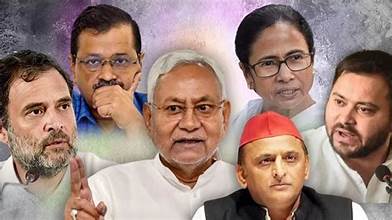
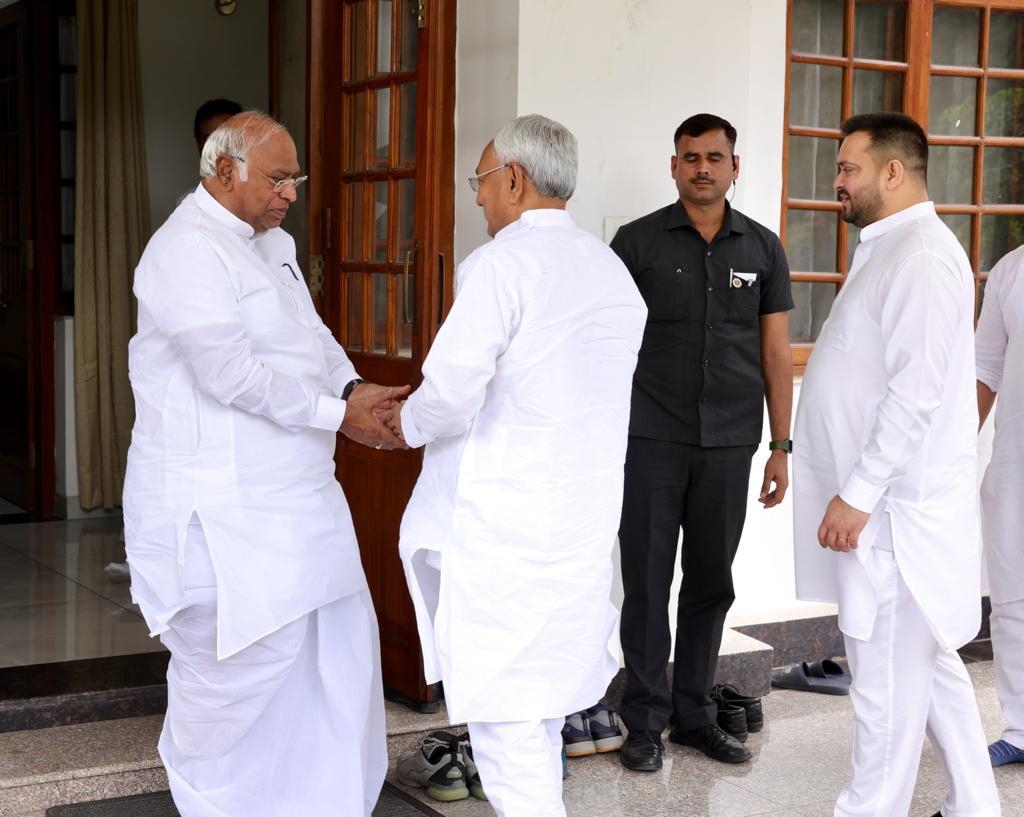
    Opposition alliance: लोकसभा चुनाव में मोदी को हराने के लिए विपक्ष के कई क्षेत्रीय दलों ने एकजुटता दिखाते हुए इण्डिया गठबंधन बनाया। जुलाई में बना इण्डिया गठबंधन आपसी खींचातानी से जूझता रहा और 2024 की जनवरी में बिखरने लगे। ममता बनर्जी ने पश्चिम बंगाल में कांग्रेस के साथ सीट शेयरिंग करने से इनकार कर दिया तो बिहार के सीएम और इण्डिया गठबंधन के सूत्रधार नीतीश कुमार ने पुनः पाला बदल कर बीजेपी से हाथ मिला लिया। नीतीश के बीजेपी में शामिल होने से यह खबरें हवा में खूब उड़ रहीं हैं कि कांग्रेस का नेतृत्व गठबंधन को धारशायी कर रहा है। वही अब सवाल यह उठता है क्या नीतीश के जाने से इण्डिया गठबंधन को होगा नुक्सान –

    भारतीय राजनीति पर शोध करने वाले जाइल्स वेर्नियर कहते हैं- बीजेपी की वर्तमान स्थिति बेहतर है। राम लहर में मोदी का विकास कार्य घर -घर पहुंच गया है। पांच राज्यों में हुए विधानसभा चुनाव में बीजेपी ने तीन राज्यों में चुनाव जीत कर साबित कर दिया। जनता मोदी की विकास नीतियों के पक्ष में खड़ी है। ऐसे में नीतीश कुमार का बीजेपी में पुनः शामिल होना इण्डिया गठबंधन के लिए बुरा संकेत है। क्योंकि नीतीश कुमार गठबंधन के सूत्रधार थे। उनको इण्डिया की तरफ से पीएम पद का उम्मीदवार देखा जा रहा था। अब जब नीतीश ने इण्डिया गठबंधन से मुँह फेर लिया है तो संभावना यह भी है की आम आदमी पार्टी, तृणमूल कांग्रेस और अन्य क्षेत्रिय दल कांग्रेस के नेतृत्व पर सवाल उठाएंगे। क्योंकि सभी यह बात स्पष्ट रूप से जानते हैं कि बीजेपी की राम लहर में कांग्रेस की रीढ़ चरमरा गई है।

    थिंक टैंक सेंटर फॉर पॉलिसी रिसर्च से जुड़े राहुल वर्मा कहते हैं- बीजेपी बेहतर स्थिति में है। दिसम्बर से जनता के मध्य बीजेपी के लिए सकारात्मक वातावरण बन रहा है। राम मंदिर के उद्घाटन ने बीजेपी का नाम जन-जन के मुख पर ला दिया है। मोदी मय वातावरण बन रहा है। लोकसभा चुनाव में बीजेपी की जीत की अधिक संभावना बन रही हैं और जनता कहीं न कहीं कांग्रेस की नीति को नकार रही है।

    गठबंधन टूटने की वजह कांग्रेस:

    कांग्रेस देश की सबसे बड़ी राजनीतिक पार्टी है। हर राज्य में कांग्रेस पार्टी की शाख मौजूद है। लेकिन आज कांग्रेस का वोट बैंक कमजोर हो गया है। साल 2019 में हुए लोकसभा चुनाव में कांग्रेस को महज 20 फीसदी वोट हासिल हुए। विपक्ष के सभी दल यह जानते हैं की बड़ा दल होने के बाद भी कांग्रेस की जनता के बीच स्थिति बेहतर नहीं है और चुनाव में जो भी वोट शेयर इण्डिया गठबंधन का बढ़ेगा वह उनकी पार्टी के दम का होगा। ऐसे में विपक्ष के अन्य दल कांग्रेस का नेतृत्व स्वीकार नहीं कर पा रहे हैं और इण्डिया गठबंधन से दूरी बना रहे हैं।

    राजनीतिक जानकारों का कहना है कि कांग्रेस क्षेत्रिय दलों से अधिक सीट चाहती है। क्षेत्रिय दल कांग्रेस की स्थिति से परिचित हैं। उनका मानना है वह जीत के साथ जाना चाहते हैं न की डूबते हुए रथ के साथ। ऐसे में सभी इण्डिया गठबंधन से दूरी बनाकर स्वयं को मजबूत स्थिति में कर रहे हैं। मोटा – मोटा समझें तो विपक्षी दल कांग्रेस के नेतृत्व को नकार रहे हैं और कहीं न कहीं गठबंधन के धराशायी होने का कारण कांग्रेस का नेतृत्व है।

  • INDIA Alliance: इंडिया गठबंधन समाप्त, कांग्रेस के सहयोगी उससे अलग

    INDIA Alliance: इंडिया गठबंधन समाप्त, कांग्रेस के सहयोगी उससे अलग

    INDIA Alliance: विपक्षी गठबंधन इंडिया की हालत लोकसभा चुनाव से पूर्व ही पतली नजर आ रही है। एकजुटता के मंत्र के साथ चुनावी रण में उतरने को तैयार महागठबंधन चुनाव से पूर्व ही बिखर गया। गठबंधन के सूत्रधार नीतीश कुमार ने बीजेपी का दामन थाम लिया। पश्चिम बंगाल की सीएम ममता बनर्जी ने कांग्रेस के साथ सीट विभाजन से इनकार कर दिया, अखिलेश ने यूपी में कांग्रेस के लिए 11 सीट देने की घोषणा की। वही कई अन्य दलों ने कांग्रेस के नेतृत्व को नकार दिया। अब ऐसे में सत्ताधारी दल बीजेपी लगातार गठबंधन की चुटकी ले रहा है और अब विपक्षी दल के नेताओं ने भी अपने गठबंधन का मजाक बनाना शुरू कर दिया है।

    महा विकास अघाडी (MVA) की बैठक में शामिल वंचित बहुजन अघाडी (VBA) के नेता प्रकाश अंबेडकर ने इंडिया गठबंधन के अस्तित्व पर सवाल खड़े किये हैं। उन्होंने कहा- अब इंडिया गठबंधन का कोई अस्तित्व नहीं है। हम उस स्थिति को महाराष्ट्र में नहीं देखना चाहते जैसी स्थिति अन्य राज्यों में देखने को मिल मिल रही हैं। मेरी राय में अब इंडिया गठबंधन समाप्त है। उसका अस्तित्व नहीं है। कांग्रेस के सहयोगी उससे अलग हो रहे हैं।

    सूत्रों के हवाले से मुझे सूचना मिली है कि समाजवादी पार्टी भी कांग्रेस से अलग हो रही है। या अलग हो चुकी है। उम्मीद करते हैं ऐसा न हो लेकिन आंतरिक सूचनाओं के मुताबिक वह अलग हो चुके हैं। क्योंकि अखिलेश यादव भी अब अलग राह पर चल रहे हैं।

    संजय राउत ने इसपर कहा, “इंडिया मोर्चा पूरी तरह से जीवित है क्योंकि कांग्रेस और आम आदमी पार्टी (AAP) इस समय दिल्ली में सीट बंटवारे पर चर्चा कर रहे हैं। हमने सकारात्मक माहौल में बैठक की। हमारा उद्देश्य चुनाव में भाजपा को हराना है और इसलिए हम सर्वसम्मति से ऐसे कदम नहीं उठाने पर सहमत हुए हैं जिससे भाजपा को फायदा हो।

  • Truth Behind Poonam Pandey’s Demise: A Closer Look at the Circumstances

    Truth Behind Poonam Pandey’s Demise: A Closer Look at the Circumstances

    In a shocking turn of events, reports surrounding the demise of Bollywood actress and model Poonam Pandey have surfaced on Friday. The revelation came through Instagram, indicating that she succumbed to cervical cancer on that fateful day. However, Poonam Pandey’s co-star Vinit Kakkad vehemently denies the authenticity of this news, asserting that it is entirely fabricated and not a publicity stunt, contrary to some media speculations.

    Debunking the Myth: Insights from a Skin Doctor

    A dermatologist on social media highlighted a critical aspect – cervical cancer patients do not typically experience sudden death. A quick check of Poonam Pandey’s Instagram reveals that just four days prior, she was in good health, actively sharing glamorous content on social media.

    If indeed her demise is factual, a thorough investigation is imperative. Recent reports concerning strained relations with her husband, involving police intervention, add another layer of complexity to this tragic story.

    Raising Awareness: Beyond Unsubstantiated Claims

    It is my hope that this news is not an unethical and irresponsible publicity stunt, particularly when dealing with sensitive issues such as cervical cancer. Such actions would be especially reprehensible when addressing health awareness campaigns.

    Renowned singer Chinmayi Sripada expressed criticism towards the scrutiny Poonam Pandey faced during her life. Sripada credited Pandey with teaching resilience, self-confidence, and shedding light on the hypocrisy in our pseudo-puritanical society. Even in her passing, Pandey remains a trailblazer, bringing awareness to HPV cancer.

    Final Thoughts: A Message of Hope Amidst Uncertainty

    Wishing you safe travels, and I extend my heartfelt wishes to the compassionate cosmos. If you contemplate reincarnation, may your encounter with humanity be surpassingly splendid. You are worthy of a better existence.

    Moreover, another user on the platform questioned the validity of Poonam Pandey’s demise, expressing disbelief. Similar sentiments were echoed by several users who reacted with shock to the news of her alleged passing.

  • Thrilling AFC Asian Cup Semifinal: Son Heung-min Leads South Korea to Victory

    Thrilling AFC Asian Cup Semifinal: Son Heung-min Leads South Korea to Victory

    In a nail-biting AFC Asian Cup quarterfinal, Captain Son Heung-min’s last-minute penalty and extra-time free-kick secured a dramatic 2-1 comeback win for South Korea against Australia. The two-time champions are now on the path to reclaiming the continental title for the first time since 1960, setting up a showdown with Jordan in the semifinals.

    Klinsmann’s Encouragement and Socceroos’ Early Lead

    Ahead of the match, South Korea’s head coach, Jurgen Klinsmann, expressed his desire for his team to reach the tournament’s end. This motivation echoed in the thrilling quarterfinal against the 2015 champions, Australia. The Socceroos, starting strong with energy and fluent transitions, took an early lead through Craig Goodwin’s left-footed volley in the 42nd minute.

    South Korea’s Persistence and Son Heung-min’s Heroics

    Despite a solid defense led by towering center-back Harry Souttar, South Korea pushed higher in the second half, attempting to equalize. The breakthrough came in injury time when Son Heung-min’s determined run led to a penalty, converted by Hwang Hee-chan, forcing the game into extra time. The star forward for Tottenham Hotspur, Son, then showcased his brilliance with a trademark free-kick, securing South Korea’s place in the next round.

    Jordan’s Historic Entry to Semifinals

    In another historic twist, Jordan secured their first-ever semifinal berth with a 1-0 victory over Tajikistan. Center-back Abdallah Nasib’s header in the 66th minute proved decisive, propelling the West Asian team forward.

    The AFC Asian Cup, featuring 24 teams, promises more excitement as the tournament unfolds from January 12 to February 10.

  • Unraveling the Enigma of Cervical Cancer: A Deep Dive into the Silent Menace

    Unraveling the Enigma of Cervical Cancer: A Deep Dive into the Silent Menace

    In a tragic turn of events, the demise of actor-model Poonam Pandey due to cervical cancer, just a day after the government’s push in its Budget to vaccinate girls in the 9-14 age group, has cast a somber light on this silent and deadly disease that claims many lives.

    The Silent Battle: Cervical Cancer and the Struggle for Early Detection

    Poonam Pandey, renowned for her role in the 2013 movie ‘Nasha,’ faced a late-stage diagnosis of cervical cancer, as disclosed by her manager. The challenging aspect of early detection stands as a critical contributor to the alarming death rates associated with this disease in India.

    “Cervical cancer often eludes detection in its initial stages, leading to delayed diagnoses and unfavorable outcomes, rendering it particularly lethal,” Dr. Raj Vardhan, OSD Chairman at Noida International Institute of Medical Sciences and Hospital, emphasized to IndiaToday.in.

    Understanding Cervical Cancer and HPV: A Closer Look

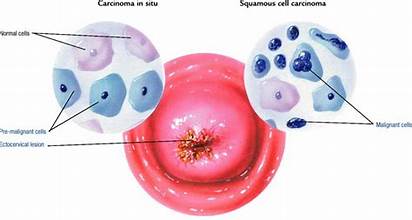
    In simple terms, cervical cancer, primarily transmitted through sexual intercourse, targets the cells lining the cervix—the lower part of the uterus connected to the vagina.

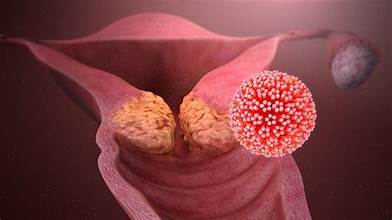
    The human papillomavirus (HPV) emerges as the primary culprit behind cervical cancer. This virus, easily transmitted during sexual activity, often exhibits no symptoms. Detecting the infection becomes challenging as symptoms may take years to manifest after exposure to an individual carrying an HPV infection.

    The Alarming Cervical Cancer Scenario in India

    Following breast cancer, cervical cancer stands as the second-most prevalent malignancy among Indian women, impacting those in their middle-aged years. In 2022, India witnessed 1,23,907 cervical cancer cases, resulting in 77,348 deaths.

    To put this in perspective, one in every five cervical cancer cases worldwide was reported in India. The nation holds the highest burden of cervical cancer in Asia, with China following closely behind, according to a Lancet study. Shockingly, India contributed to 21% of the global cervical cancer cases reported in 2022.

    The Puzzling Challenge of Cervical Cancer Detection

    Dr. Vandana Jain, Head of Gynaecology, Surgical Oncology at Rajiv Gandhi Cancer Institute & Research Centre (RGCIRC), shed light on the challenging 10–15 year span between HPV infection and cancer development.

    “While 80-90% of sexually active women may carry the HPV virus, the immune system typically clears it within two to three years. However, persistent infections, particularly with high-risk strains like HPV 16 and 18, can escalate into cervical cancer,” explained Dr. Jain.

    Experts point out that cultural stigma remains attached to cervical cancer in India, resulting in many women avoiding screenings. In rural areas with limited access to screening and treatment, the burden of cervical cancer is exacerbated by inadequate healthcare infrastructure, cultural taboos, and a lack of awareness.

    Addressing the Imperative: HPV Vaccination Coverage and Public Awareness

    Despite welcoming the government’s initiative to offer free vaccinations for girls aged nine to 14, experts stress the need for enhanced screening accessibility and public awareness about the disease.

    “Although vaccination doesn’t guarantee complete protection, it plays a vital role in reducing the burden of cervical cancer in the country,” stated Dr. Jain.

    Dr. Ishwar Gilada, an infectious disease specialist and president of the AIDS Society of India, highlighted the poor coverage of HPV vaccination in India.

    “Merely 1% of the eligible female population receives vaccination, primarily due to the dominance of imported HPV vaccines and the monopoly of certain pharmaceutical giants,” Dr. Gilada expressed.

  • Unveiling the Hidden Dangers: Excessive Salt Consumption and its Link to Cancer

    Unveiling the Hidden Dangers: Excessive Salt Consumption and its Link to Cancer

    Introduction

    In the pursuit of a healthy lifestyle, one often underestimates the impact of dietary choices on overall well-being. Recent studies have shed light on a concerning correlation between elevated salt intake and an increased risk of cancer. Specialists in the field of oncology caution that a surplus of salt in the diet contributes to the production of chemicals that can potentially foster the development of cancerous cells. Let’s delve into the intricacies of this alarming connection.

    The Chemical Culprits

    Experts posit that an overindulgence in salt leads to the generation of compounds within the body that can pose a heightened threat to organs like the liver and intestines. These substances, identified as microplastics, have been pinpointed as potential cancer catalysts. Research has uncovered the presence of cancer-inducing microplastics in table salt, accentuating the risks associated with its consumption.

    Microplastics in Table Salt

    A groundbreaking study has revealed that table salt contains microplastics, which are minuscule plastic particles capable of inducing cancer. The ubiquitous use of table salt worldwide makes this revelation particularly concerning. While it is a staple in nearly every household, the findings suggest that table salt may not be as innocuous as once thought.

    The Indonesian Revelation

    Researchers from Andalas University in Indonesia have asserted that every kilogram of table salt harbors approximately 33 microplastics. The microscopic nature of these particles means they can infiltrate the human body, potentially leading to the development of cancers and cardiovascular diseases. This startling claim is based on an extensive analysis of 21 different brands of table salt.

    Plastic Fibers: A Silent Threat

    During the research process, scientists meticulously extracted tiny fragments of plastic fibers found in the sampled table salt. These plastic fibers, when ingested, can pose severe risks to the human body. The revelation of plastic contamination in a seemingly harmless kitchen staple raises crucial questions about the safety of our dietary choices.

    The Origins of Fiber Contamination

    The presence of plastic fibers in table salt can be attributed to the contamination of seawater. Microplastics, carbon-based substances, and sand particles from ocean water find their way into salt during the production process. This contamination underscores the need for a closer examination of our salt sources and production methods.

    Rethinking Dietary Habits

    As awareness grows about the potential dangers lurking within our daily diets, it becomes imperative to reconsider our reliance on table salt. Choosing alternative sources of seasoning that are free from microplastics may be a prudent step towards safeguarding our health. Additionally, advocating for more stringent quality control measures in salt production can contribute to minimizing the risks associated with its consumption.

  • India’s Economic Odyssey: From Resilience to a $7 Trillion Ambition by 2030

    India’s Economic Odyssey: From Resilience to a $7 Trillion Ambition by 2030

    In the ever-expanding global panorama, India has found itself under the spotlight like never before. Weathering the challenges posed by global headwinds and the lingering impact of the pandemic, the Indian economy has showcased remarkable resilience. This can be attributed to a series of reforms, implemented at an impressive pace, particularly in recent years, bolstered by a robust domestic demand.

    Sustaining a growth rate exceeding 7% for the past three years, coupled with a strategic plan to curtail the fiscal deficit to 4.5% by FY 26, forms the bedrock for catapulting the GDP from approximately USD 3.7 trillion to an ambitious USD 7 trillion by the year 2030.

    The Budget serves as a blueprint for elevating the economy through the pillars of Governance, Development, and Performance. This once again underscores the government’s commitment to providing stability and certainty to taxpayers, a consistent theme in recent years.

    Turning attention to specific tax proposals, the Finance Bill advocates for maintaining existing tax rates for both direct and indirect taxes, including import duties, aligning with the essence of the interim budget.

    In a bid to stimulate and enhance investments in the International Financial Services Centre (IFSC), the Finance Bill suggests an extension of the sunset clause for the commencement of operations by Offshore Banking Units, Category I Foreign Portfolio Investors (FPIs), and IFSC units engaged in leasing aircraft or ships. This extension spans an additional year, from 31 March 2024 to 31 March 2025.

    A parallel extension is proposed for investments made by sovereign wealth funds and pension funds, extending the timeline for availing exemptions related to income in the form of dividends, interest, and long-term capital gains.

    The deadline for the incorporation of eligible start-ups has also been prolonged, shifting from 31 March 2024 to 31 March 2025. This move is poised to invigorate the startup ecosystem. Notably, the government aims to introduce a faceless scheme for Dispute Resolution Panel, Tax Tribunal, and Transfer Pricing proceedings by 31 March 2025. Additionally, in a stride towards coherence, the input service distributor mechanism is slated to become mandatory.

  • Unveiling the Gravity of Cervical Cancer Among Women in India

    Unveiling the Gravity of Cervical Cancer Among Women in India

    Understanding the Numbers

    Cervical cancer has claimed the life of the renowned model and actress, Poonam Pandey. Following her demise, discussions about cervical cancer have flooded social media platforms. However, a considerable number of individuals remain unaware of the intricacies surrounding this disease. Today, we delve into the seriousness of cervical cancer for women and shed light on the statistics of cervical cancer patients in India.

    The Statistics Speak Volumes

    Cervical cancer is a globally severe illness, with a rapid increase in patients in India. According to recent statistics, in just 2022, India reported 123,907 cases of cervical cancer. Shockingly, 77,348 women succumbed to this disease. Every fifth cervical cancer patient worldwide hails from India, making it the country with the highest number of affected women in Asia. China ranks second after India, as per a Lancet study. Moreover, out of the total 604,127 global cervical cancer cases in 2022, approximately 21% were recorded in India.

    Unraveling the Root Causes

    In simpler terms, cervical cancer primarily spreads through sexual intercourse. This disease affects the upper cells of the cervix, the lower part of the uterus, directly connected to the vagina. The greatest risk arises through sexual intercourse due to this anatomical proximity. HPV (Human Papillomavirus) is the culprit responsible for cervical cancer. This virus easily transfers from one person to another during sexual encounters, subsequently gradually spreading.

    The Second Most Dangerous Disease for Women

    Once infected with the virus, it takes several years for cancer symptoms to manifest. This delayed onset makes it challenging for individuals to pinpoint the exact time of infection. Following breast cancer, cervical cancer stands as the second most perilous disease among Indian women, predominantly affecting those between the ages of 40 and 60. However, there is a glimmer of hope as the government has announced the introduction of free cervical cancer vaccines in its budget.

    Promoting Awareness and Prevention

    Importance of Regular Check-ups

    Regular health check-ups and screenings play a pivotal role in the early detection of cervical cancer. Women, especially those in the at-risk age group, should prioritize routine check-ups to identify any potential signs at an early stage. Early detection significantly enhances the chances of successful treatment and recovery.

    Embracing Vaccination

    The government’s initiative to introduce free cervical cancer vaccines is a significant step toward preventing the spread of this deadly disease. Vaccination can act as a shield, providing immunity against the HPV virus and reducing the risk of cervical cancer. Women should take advantage of these vaccination programs to safeguard their health.

    Spreading Knowledge and Awareness

    Educating women about the risks, symptoms, and preventive measures of cervical cancer is crucial. Awareness campaigns, both online and offline, can empower women with the knowledge needed to make informed decisions about their health. Collaborative efforts from healthcare professionals, government bodies, and non-profit organizations can contribute to a significant reduction in cervical cancer cases.