Author: admin

  • NEET MDS 2024: Seamless Registration and Vital Details

    NEET MDS 2024: Seamless Registration and Vital Details

    NEET MDS 2024: The National Board of Examinations in Medical Sciences (NBEMS) has initiated the online registration process for the National Eligibility cum Entrance Test for Masters of Dental Surgery (NEET MDS) 2024. Aspiring candidates can initiate their registration by visiting the NBEMS official website at nbe.edu.in, and the deadline for application submission is February 19.

    NEET MDS 2023: Key Dates and Exam Details

    Following the schedule, the National Board of Examinations (NBE) is set to conduct NEET MDS 2023 on March 18, 2024. Admit cards are scheduled for release on March 13. This computer-based examination will take place at various test centers across India. NEET MDS is a pivotal eligibility-cum-ranking entrance exam for individuals aspiring to secure admission to diverse dental or MDS programs. The eagerly awaited results are expected to be disclosed by April 18.

    Unveiling NEET MDS 2023: Eligibility Unraveled

    NEET MDS 2023: Eligibility Criteria Unfolded

    Prospective candidates are eligible to apply for NEET MDS if they possess a Bachelor of Dental Surgery (BDS) degree from an institute duly registered with the State Dental Council, having either provisional or permanent registration. Additionally, a mandatory one-year rotational internship in an approved/recognized dentistry college is prerequisite. The cut-off date for completing the internship, ensuring eligibility for NEET-MDS 2024, is March 31.

    Navigating NEET MDS 2024: Streamlined Application Process

    NEET MDS 2024: Step-by-Step Application Guide

    Step 1: Visit the official website of NBEMS at nbe.edu.in

    Step 2: Locate the ‘NEET MDS’ tab and click on the ‘Application Link.’

    Step 3: On the subsequent page, access the new registration link to complete the registration process and generate a unique user ID and password.

    Step 4: Log in and meticulously fill out the application form as per instructions. Additionally, upload the required documents.

    Step 5: Opt for the preferred exam city, make the essential payment, and submit the form.

    Step 6: Retain a hard copy of the NEET MDS 2024 application form, including the mentioned transaction ID, for future reference.

    Financial Facets: Reduced NEET MDS Exam Fees

    In a welcome move, the NEET MDS exam fees for all categories have witnessed a reduction compared to the previous year. General and OBC candidates are required to pay an examination fee of Rs 3500, while SC, ST, and PwD applicants need to remit Rs 2500. It is imperative to note that once application forms are submitted, withdrawal is not permissible. The official notice explicitly states, “Applications forms once submitted cannot be withdrawn. Fee shall neither be carried forward to a future date nor refunded under any circumstances. Any claim for refund, adjustment, or carrying forward of Application fee will not be entertained.


  • Explore Romantic Destinations in Noida for an Unforgettable Valentine’s Week

    Explore Romantic Destinations in Noida for an Unforgettable Valentine’s Week

    Valentine’s Week stands as the pinnacle of celebration for lovers, couples, and those deeply entwined in relationships. Globally, people eagerly make reservations in restaurants and cafes, seeking to amplify their love and create lasting memories. As you plan to immerse yourself in the joy of this week, discover the enchanting locales in Noida that promise the perfect backdrop for romance.

    DLF Mall Of India: A Shopper’s Paradise

    Dive into a world of romance amidst retail therapy at DLF Mall of India, one of the largest shopping centers in Noida. This expansive mall offers more than just a shopping experience; it’s a complete package of entertainment and indulgence. From diverse culinary delights to top-notch clothing brands, cutting-edge gadgets, and a captivating game zone, DLF Mall ensures an unforgettable day. Moreover, the presence of a spa allows you to pamper yourselves, adding an extra layer of relaxation to your celebration.

    The Grand Venice Mall: Venetian Splendor in Noida

    Step into the romantic allure of Venice at The Grand Venice Mall, a splendid destination for spending quality time on Valentine’s Day. Immerse yourself in the Venetian-themed ambiance, creating a perfect setting for couples to unwind. Capture precious moments in this picturesque environment, indulge in shopping extravaganzas, and savor delectable meals at luxurious restaurants and cafes. The mall also offers various entertainment options, including a movie theater and a game zone, enhancing your overall experience.

    Garden Of Five Senses: A Hidden Romantic Gem

    Amidst the hustle of high-end cafes and restaurants, Garden of Five Senses emerges as an underrated yet romantic haven in Noida. This charming place stimulates all five senses – sight, sound, touch, smell, and taste. Immerse yourself in the beauty of its nurseries, take a leisurely stroll on the bamboo span, indulge in the melodic fountain, and explore the diverse culinary offerings at the food court. Escape the mainstream and discover the understated charm of Garden of Five Senses with your beloved.

    Worlds Of Wonder: A Thrilling Valentine’s Adventure

    For couples seeking an adventurous Valentine’s Day experience, Worlds of Wonder is the ultimate destination. Packed with thrilling rides and attractions, this amusement park provides an adrenaline-pumping celebration for you and your partner. From exciting water slides to delightful culinary options in the food court, Worlds of Wonder ensures an action-packed and deliciously entertaining Valentine’s Day celebration.

  • Explore the Charms of Celebrating Valentine’s Day in Goa on a Budget

    Explore the Charms of Celebrating Valentine’s Day in Goa on a Budget

    Valentine’s Day: Thinking about planning a Valentine’s Day getaway with your friends or life partner in Goa? Well, you’re in luck! Now, you can explore the vibrant beauty of Goa even on a tight budget. The Indian Railway Catering and Tourism Corporation (IRCTC) is offering budget-friendly Goa travel packages. Let’s delve into the details.

    Package Pricing

    IRCTC has introduced a 5-day and 4-night tour package for Goa, which includes flights to and from Goa. If you’re interested in this package, you’ll need to pay ₹51,000 per person for flight, accommodation, and local transportation. For a group of two, the cost per person is ₹42,500, and for a trio, it’s ₹30,500 per person.

    Government Employees Can Reap Benefits

    Government employees can make the most of their LTC (Leave Travel Concession) and Earned Leave Travel Allowance (ELTA) by availing themselves of the IRCTC LTC tour package. All the necessary information can be found on the official IRCTC website. During the Goa tour, you can explore attractions like the Miramar Beach in South Goa, an evening cruise on the Mandovi River, Baga Beach, Candolim Beach, Sinquerim Beach, Snow Park, and the Basilica of Bom Jesus.

    Enjoy Water Activities

    Known for its vibrant nightlife, water sports, seafood, and pubs, North Goa’s coastline along the Arabian Sea is famous both nationally and internationally. With the Arabian Sea in proximity, Goa stands out as one of the most popular small states. There are numerous restaurants in Goa where you can relish delicious seafood and experience local cuisine. Witnessing a breathtaking sunset during a romantic evening can be a memorable experience. Goa is a popular destination for water activities, and there are several hotspots for parasailing, jet-skiing, windsurfing, and more.

  • AVANI GREGG’S HOT SHOTS: Avani Gregg’s Captivating Moments in the Bahamas

    Embark on a visual journey as we explore the enchanting allure of Avani Gregg’s recent escapade in the breathtaking Bahamas. In this article, we’ll delve into the mesmerizing snapshots captured during Avani Gregg’s tropical getaway, offering a glimpse into the picturesque scenes that have captivated audiences worldwide.

  • Transformative Fiscal Vision: Insights from the 2024 Interim Budget

    Transformative Fiscal Vision: Insights from the 2024 Interim Budget

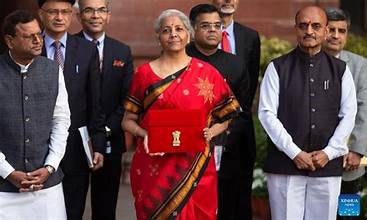
    In a strategic move ahead of the impending Lok Sabha elections, Union Finance Minister Nirmala Sitharaman unveiled the 2024 interim budget, making pivotal decisions that resonate with the economic pulse of the nation. Let’s delve into the key highlights of this financial roadmap and its implications.

    Unwavering Tax Policies

    In a surprising turn of events, the interim budget retained existing tax rates for both direct and indirect taxes, including import duties. This decision aims to provide stability in the economic landscape during the election period, fostering an environment of financial certainty.

    Subsidy Adjustments: Navigating Economic Waters

    Major subsidies on essential commodities such as food, fertilizers, and fuel witnessed an 8% reduction. This strategic move reflects a nuanced approach to balance economic sustainability while ensuring continued support for essential sectors.

    MGNREGA Allocation: Stability Amidst Transition

    The allocation for the MGNREGA rural employment scheme remained constant, emphasizing the government’s commitment to rural development. This stability is crucial during the interim period, setting the stage for a seamless transition post-election.

    Direct Tax Amendments: Providing Relief

    Minister Sitharaman proposed the withdrawal of outstanding direct tax demands, offering relief up to Rs 25,000 for FY09/10 and up to Rs 10,000 for FY10/11 to 14/15. This move is anticipated to benefit approximately one crore taxpayers, fostering a more taxpayer-friendly fiscal environment.

    Economic Evolution: A Decade of Positive Transformation

    Highlighting the economic strides of the past decade, Sitharaman noted a threefold increase in direct collections and a 2.4 times surge in the number of tax return filings. The minister expressed optimism, emphasizing the profound positive transformation witnessed by the Indian economy.

    Inclusive Development: A Pledge for the Future

    Sitharaman underscored the government’s commitment to prioritize the needs of the Garib (Poor), Mahilayen (Women), Yuva (Youth), and Annadata (Farmer). This commitment, she asserted, is the highest priority for Prime Minister Narendra Modi’s government.

    Vision 2047: A ‘Viksit Bharat’ on the Horizon

    In her sixth straight budget presentation, Sitharaman shared the ambitious vision of making India a ‘Viksit (Developed) Bharat’ by 2047. The development, she emphasized, would be all-round, all-inclusive, and all-pervasive.

    Addressing Population Challenges: A High-Powered Committee

    Acknowledging challenges arising from fast population growth and demographic shifts, the finance minister announced the formation of a “high-powered committee.” This committee is tasked with providing extensive recommendations to address challenges comprehensively in alignment with the goal of ‘Viksit Bharat.’

    Fiscal Discipline: A Roadmap for the Future

    Sitharaman projected India’s fiscal deficit at 5.1% of the GDP for the financial year 2024-25. Despite challenges, she affirmed the government’s commitment to fiscal consolidation, targeting a deficit below 4.5% by the financial year 2025-26.

    FDI Triumph: A ‘Golden Era’

    Highlighting a remarkable achievement, Sitharaman celebrated a ‘golden era’ in foreign direct investment (FDI) between 2014 and 2023. The sum of $596 billion surpassed the figures recorded between 2005 and 2014, showcasing India’s attractiveness to foreign investors.

    Strategic Budget Allocations: A Transparent Approach

    The budget allocates Rs 6.2 lakh crore to the Ministry of Defence, emphasizing national security. Additionally, significant allocations were made to the Ministry of Road Transport and Highways (MoRTH) at Rs 2.78 lakh crore and the railways at Rs 2.55 lakh crore.

    Infrastructure Development: Key Initiatives

    Sitharaman announced the conversion of 40,000 normal rail bogies to “Vande Bharat standards,” enhancing passenger safety and comfort. Furthermore, three major economic railway corridor programs were introduced under PM Gati Shakti.

  • Unveiling the Fiscal Horizon: Interim Union Budget 2024-25 Breakdown

    Unveiling the Fiscal Horizon: Interim Union Budget 2024-25 Breakdown

    In a momentous presentation on Thursday, Finance Minister Nirmala Sitharaman unveiled the Interim Union Budget 2024-25 in Parliament. Despite its nature as a vote-on-account, this budget did not hold back in delivering impactful revelations. Notably, both direct and indirect tax rates have remained steadfast, preserving the status quo. Let’s delve into the key highlights of this budget and decipher its implications for the fiscal year.

    A Surge in Capital Expenditure

    One of the pivotal announcements revolves around a remarkable 11.1% surge in the capital expenditure outlay for the upcoming year, reaching a staggering Rs 11,11,111 crore. This substantial increase equates to 3.4% of the GDP, signaling a robust financial commitment to developmental initiatives.

    Continued Support for State Expenditure

    The government plans to sustain the scheme of a 50-year interest-free loan for capital expenditure to states. This year’s allocation earmarks a total outlay of Rs 1.3 lakh crore, with a specific provision of Rs 75,000 crore as a 50-year interest-free loan. This financial injection aims to bolster Viksit Bharat’s milestone-linked reforms implemented by state governments.

    Fiscal Consolidation on Track

    Addressing the imperative of fiscal consolidation, Minister Sitharaman reiterated the commitment to reducing the fiscal deficit below 4.5% by 2025-26. The estimated fiscal deficit for 2024-25 stands at 5.1% of the GDP, aligning with the stipulated path of economic prudence.

    Borrowings and Market Dynamics

    Sitharaman disclosed that gross and net market borrowings through dated securities for 2024-25 are anticipated at Rs 14.13 and 11.75 lakh crore, respectively. Strikingly, both figures are projected to be lower than those recorded in the preceding fiscal year.

    Targeted Welfare Approach

    Prime Minister Narendra Modi’s vision emphasizes the well-being of four major segments – the ‘Garib’ (Poor), ‘Mahilayen’ (Women), ‘Yuva’ (Youth), and ‘Annadata’ (Farmer). Minister Sitharaman underscored that their welfare remains the government’s topmost priority.

    Empowering India: The ‘Viksit Bharat’ Vision

    With an eye on making India a ‘Viksit Bharat’ by 2047, Minister Sitharaman stressed the need to enhance people’s capabilities and empower them. The government is keen on fostering inclusive growth and ensuring that the benefits reach every stratum of society.

    Regional Empowerment Initiatives

    Focusing on regional development, the government aims to transform the eastern region into a potent driver of India’s growth. Initiatives like PM Awas Yojana (Grameen) are making significant strides, with a target of three crore houses. Additionally, the plan includes rooftop solarisation to provide up to 300 units of free electricity every month to one crore households.

    Golden Era for Tech-savvy Youth

    In a move set to define a golden era for the tech-savvy youth, a corpus of one lakh crore rupees will be established through a 50-year interest-free loan. This financial backing aims to propel technological advancements and innovation.

    Infrastructural Thrust: Railways and Aviation

    The budget outlines ambitious infrastructural plans for the railways, focusing on economic railway corridor programs, port connectivity corridors, and high-traffic density corridors. Simultaneously, the aviation sector witnesses a doubling of airports to 149, with 517 new routes catering to 1.3 crore passengers. Indian carriers have proactively placed orders for over 1,000 new aircraft.

    Resolving Taxation Woes

    The Interim Budget proposes the withdrawal of outstanding direct tax demands, benefitting taxpayers with dues up to Rs 25,000 for the period up to the financial year 2009-10 and up to Rs 10,000 for financial years 2010-11 to 2014-15.

    Tax Landscape and GST Impact

    Sitharaman acknowledged the commendable growth in direct tax collections, which have more than tripled over the last decade, accompanied by a significant increase in return filers. She highlighted the positive impact of GST, which has streamlined the indirect tax regime, reducing compliance burdens for trade and industry.

    Economic Status White Paper

    Reflecting on the state of the Indian economy, Minister Sitharaman mentioned the government’s successful efforts since 2014 to mend the economy and streamline governance systems, driven by a ‘nation-first’ ethos.

    Sustaining Support for Start-ups

    In a nod to the entrepreneurial spirit, the government announced tax benefits for start-ups and investments made by sovereign wealth or pension funds. The proposal aims to extend certain tax benefits, including tax exemption on specific income of IFSC units, until March 31, 2025.

  • Mastering Your Finances: Transformative Habits for Financial Success

    Mastering Your Finances: Transformative Habits for Financial Success

    In the realm of personal finance, mastering key habits is the gateway to enduring financial success. Through a lens backed by various studies and economic principles, let’s explore nine everyday financial habits that, when cultivated, can pave the way to financial stability and prosperity.

    Crafting a Concrete Budget: The Foundation of Financial Well-being

    Ditching the Financial Tightrope

    One of the cornerstones of financial success is the meticulous crafting and adherence to a budget. Without this financial compass, navigating the intricacies of income and expenses becomes an uphill task, often leading to overspending and a shortfall in savings. Delving into fundamental economic theories of consumer behavior, it becomes evident that a well-structured budget is the key to avoiding these pitfalls.

    Tackling the Debt Dilemma: Striking a Balance for Stability

    Breaking the Chains of Debt

    Research consistently underscores the detrimental impact of a high debt-to-income ratio on financial stability. Particularly, high-interest debts like credit card balances can act as formidable barriers to achieving lasting financial health. By addressing and curbing these debt burdens, individuals can set themselves on a path towards economic stability.

    Fortifying Financial Foundations: The Power of Emergency Savings

    Unmasking the Unexpected

    In the unpredictable landscape of personal finance, the absence of emergency savings can leave individuals vulnerable to unforeseen financial shocks. Behavioral economics studies shed light on the tendency of individuals to underestimate the likelihood of unexpected expenses. Establishing a robust emergency fund becomes imperative to shield against the uncertainties of life.

    Escaping the Spending Trap: Embracing Financial Prudence

    Breaking Free from the Cycle

    Living beyond one’s means is a perilous journey that often stems from societal pressures. Continuously spending more than one earns can create a never-ending cycle of debt and financial instability. Unraveling this cycle requires a conscious effort to align spending habits with income levels and fostering a culture of financial prudence.

    Harnessing Tax Benefits: Maximizing Financial Growth Opportunities

    The Untapped Potential

    A significant stride towards financial success lies in leveraging tax-saving opportunities, such as retirement accounts. Failing to exploit these avenues can result in missed opportunities for financial growth. Understanding and capitalizing on tax advantages contribute to the overall financial well-being of individuals.

    Investing Wisely: Growing Wealth Through Informed Choices

    Unlocking the Wealth Potential

    Hesitation or a lack of knowledge in the realm of investments can impede the growth of personal wealth. Numerous economic studies affirm that this hesitation often stems from a deficiency in financial education. Empowering oneself with investment knowledge opens the door to wealth accumulation and financial prosperity.

    Securing the Future: Embracing Comprehensive Insurance

    Mitigating Financial Risks

    Neglecting insurance coverage, be it health, auto, or home insurance, exposes individuals to significant financial burdens during emergencies. This oversight contradicts basic risk management principles. Prioritizing comprehensive insurance ensures a safety net, shielding against unexpected financial setbacks.

    Conquering Impulse: The Art of Mindful Purchases

    Resisting the Temptation

    Frequent impulse purchases, fueled by a culture of consumerism, can erode financial stability over time. Delving into consumer behavior research reveals the profound impact of impulsive buying on financial well-being. Developing mindfulness in spending cultivates financial discipline and fortifies economic foundations.

    Lifelong Learning: The Key to Financial Empowerment

    Illuminating the Path to Financial Literacy

    Continual financial education is the linchpin to informed decision-making and seizing opportunities. Countless studies emphasize the correlation between financial literacy and effective personal financial management. Embracing ongoing financial education equips individuals with the tools to make sound financial choices throughout their lives.

  • Jharkhand Political Shift – Champai Soren Takes Charge

    Jharkhand, a state entwined in political intrigue, witnessed a seismic shift as Hemant Soren, former Chief Minister, faced arrest by the Enforcement Directorate (ED) in connection with land scams. This development prompted his resignation from the chief ministerial post. In his stead, Champai Soren is set to take the oath as the new CM.

    The Soren Dynasty: An Unsettling Legacy

    Champai Soren’s ascent to the Chief Minister’s position raises skepticism within the ranks of the Jharkhand BJP. Pratul Shahdev, the spokesperson for the state BJP, doubts any substantial change in Jharkhand’s structure or condition under Champai Soren’s leadership. The Soren family carries a dubious record of corruption allegations amounting to a staggering ₹70,000 crores during their first four years in government. Given this track record, the prospect of significant change appears bleak. Nonetheless, we extend our best wishes to the new Chief Minister, hoping for adherence to the rule of law and a departure from the alleged mineral wealth exploitation and land plunder that occurred under Hemant Soren’s administration.

    The Swearing-In Ceremony: A Glimpse into the Future

    The swearing-in ceremony for Champai Soren as the Chief Minister of Jharkhand is scheduled for 12:15 PM in Ranchi. The Governor extended an invitation on Thursday for the formation of the new government.

    Coalition Dynamics: A Crucial Support Base

    The Mahagathbandhan enjoys the backing of 43 legislators, with 24 from JMM, 17 from Congress, and one each from AJSU and CPI(ML).

    Congress’s Stipulation and the Rahul Gandhi Connection

    Rajesh Thakur, the Congress state president, granted Champai Soren a 10-day window to prove his government’s majority. Congress, a crucial ally in the JMM-led coalition, ensures stability. When queried about Champai Soren’s swearing-in, Thakur assured that they would ensure the oath-taking ceremony occurs by Friday afternoon, preceding Rahul Gandhi’s ‘Bharat Jodo Nyay Yatra’ in the state.

  • Unveiling the Fiscal Landscape: Delhi’s Budget Allocations Critiqued

    Unveiling the Fiscal Landscape: Delhi’s Budget Allocations Critiqued

    In a significant revelation, Finance Minister Nirmala Sitharaman has allocated a mere ₹1,168 crore for the National Capital Region, Delhi, in the interim budget. The Aam Aadmi Party-led Delhi government has accused the central government of displaying stepmotherly treatment regarding budget allocation. Atishi, the Finance Minister of Delhi, took a jibe at the BJP, asserting that the budget proves it’s a government of empty promises. Prime Minister Modi had pledged to create 2 crore jobs annually back in 2014, yet, over the past 10 years, a staggering one crore people have been left unemployed.

    Allegations of Deceptive Tactics

    Atishi claims that Finance Minister Nirmala Sitharaman has presented a new ‘jumla’ (empty rhetoric) in the interim budget, stating that they will generate 55 lakh jobs. However, no steps have been taken to mitigate inflation. The Delhi government argues that considering the amount of tax the citizens contribute, the central government should have allocated ₹15,000 crores to Delhi. Although the Center has provided funds to all local bodies, the Municipal Corporation of Delhi (MCD) has received nothing, not even a single rupee.

    She criticized the BJP-led central government, stating that it thrives on hollow promises. According to Atishi, “The government has allocated ₹16,000 crores to urban local bodies, but there is no provision for MCD. They have no funds for the Delhi government or MCD.”

    Exclusion from Central Grants

    It’s worth noting that there is no provision for any central grant for Delhi this time. Finance Minister Nirmala Sitharaman presented the interim budget on Thursday, allocating ₹1,168.01 crores for the financial year 2024-25. In the budget for 2022-23, Delhi was allocated ₹960 crores, and this was increased to ₹1,168.01 crores for the year 2023-24. Surprisingly, this time, there was no increase in the budget for Delhi. There is no allocation in return for Delhi’s contribution to central taxes and duties. In the budget for 2022-23, this share was ₹325 crores.

  • Transformative Boost: Modi Government’s Bold Move to Strengthen India’s Infrastructure

    Transformative Boost: Modi Government’s Bold Move to Strengthen India’s Infrastructure

    Modi government has declared a substantial increase in the budget to fortify the foundational framework of the nation. Finance Minister Nirmala Sitharaman, unveiling an 11.1% surge in the infrastructure budget, has elevated it to a staggering 11.11 trillion rupees, constituting 3.4% of the GDP.

    Paving the Way for World-Class Infrastructure

    Emphasizing the resilience of the fundamental structure, the Finance Minister has decided to consecutively enhance the Capital Expenditure budget for the fourth year. With the infrastructure budget bolstered by 11.1%, reaching 11.11 trillion rupees, it accounts for 3.4% of the GDP.

    Construction of Three Economic Railway Corridors

    With the anticipation of an increased Capital Expenditure budget, there is a prevailing expectation that the government’s focus is set on strengthening the railway infrastructure in conjunction with the robustness of the foundational framework. The implementation of three major economic railway corridor programs, including Energy, Minerals, and Cement Corridors, is in the pipeline. Additionally, initiatives for port connectivity and high-density corridors are in the works.

    Transformation of 40,000 Bogies to Vande Bharat Standard

    Under the ambit of Prime Minister’s Gati Shakti for multi-modal connectivity, these projects are identified to alleviate logistics costs in the country. These endeavors are poised to ameliorate passenger train operations by alleviating congestion in high-traffic corridors. This not only ensures the safety of rail travel but also facilitates an increase in train speeds. Finance Minister announced a conversion plan for 40,000 normal bogies to the Vande Bharat standard, aiming to enhance the safety and comfort of rail travel.

    Potential Expansion in the Full Budget

    A provisional provision of 11.11 trillion rupees has been earmarked in the interim budget. However, with the presentation of the full budget after the formation of the new government, this amount might witness an augmentation. In the previous year’s budget for 2023-24, a provision of 10 trillion rupees was allocated for capital expenditure.